

Five Future Technologies 2026-2036: Transformative Innovations Shaping the Next Decade
Forbes magazine identifies five transformative future technologies poised to reshape our world by 2036: new computer architecture, genomics, nanotechnology, energy storage technology, and robotics. As these emerging technologies converge and develop synergistically, humanity stands at the threshold of mastering the physical world at unprecedented scales. This comprehensive analysis from SPRING TECHNOLOGY examines how these disruptive innovations will impact industries, connectivity requirements, and electronic component demands through 2036.
Understanding Technology Evolution: From Digital to Physical Transformation
The past two decades witnessed explosive digital technology growth, with global internet penetration surging from 5% in 2001 to over 65% by 2026. Early mobile phones served basic communication functions, while smartphones remained distant concepts. Google was a startup, YouTube hadn’t launched, e-commerce viability was questioned, and social media was nonexistent. Today, technological advancement accelerates exponentially, transitioning from virtual world innovations to physical world transformation by 2030 and beyond.
1. New Computer Architecture: Beyond Moore’s Law
Traditional silicon-based computing approaches fundamental limitations, demanding revolutionary computer architecture innovations.
1.1 Moore’s Law Limitations and Challenges
Gordon Moore’s 1965 prediction—chip processing speed doubling every 18 months—guided semiconductor industry development for 50 years. However, Moore’s Law now reaches physical limits. Three-dimensional stacking and FPGA chip technology extend capabilities marginally, but fundamental architectural transformation becomes necessary for continued progress.
1.2 Quantum Computing Revolution
Quantum computing leverages quantum mechanical superposition and entanglement effects, promising computational performance millions of times exceeding classical computers. Working prototypes exist today, with commercialization expected within 5-7 years. Quantum computers will revolutionize cryptography, drug discovery, financial modeling, and complex optimization problems inaccessible to classical architectures.
1.3 Neuroscience-Inspired Computing
Brain-inspired neuromorphic chips mimic human neural architecture, potentially achieving processing speeds one billion times faster than existing computers. These architectures excel at pattern recognition, machine learning, and adaptive processing—critical for artificial intelligence applications. Commercial deployment timelines span 7-10 years as manufacturing processes mature.
2. Genomics: Personalized Medicine and Biological Engineering
Genomic technology transforms healthcare, agriculture, and industrial biotechnology through precise genetic manipulation.
2.1 Genome Sequencing Cost Reduction
Human genome sequencing costs plummeted from $3 billion (2003) to under $1,000 today, projected below $100 by 2030. This dramatic cost reduction enables widespread genomic screening, personalized medicine, and population-scale genetic research previously economically unfeasible.
2.2 Cancer Treatment and Immunotherapy
Genomic analysis enables precision cancer treatment through patient-specific genetic profiling. By 2030, genomics combined with immunotherapy will stimulate autoimmune responses against cancer cells, transforming previously fatal diagnoses into treatable conditions. Breast cancer, leukemia, and solid tumor treatments already demonstrate remarkable efficacy through genomic-guided therapies.
2.3 CRISPR and Synthetic Biology
CRISPR gene-editing technology enables precise genetic modifications, creating functional organisms in cell factories. Engineered bacteria and microorganisms produce materials including plastics, pharmaceuticals, and biofuels. Synthetic biology applications expand across agriculture (drought-resistant crops), medicine (gene therapies), and industrial manufacturing (sustainable materials).
3. Nanotechnology: Molecular-Scale Engineering
Nanotechnology manipulates matter at atomic and molecular scales, creating materials with unprecedented properties.
3.1 From Science Fiction to Reality
Richard Feynman’s 1959 nanotechnology vision—atomic-scale material production—sounded like science fiction. Today, graphene, quantum dots, and carbon nanotubes demonstrate nanotechnology’s practical reality. These materials exhibit extraordinary electrical, thermal, and mechanical properties enabling next-generation electronics, energy storage, and composite materials.
3.2 Programmable Materials and Digital Manufacturing
By 2030, molecular-level material design becomes downloadable and manufacturable, analogous to software distribution today. This paradigm shift enables on-demand production of specialized materials with tailored properties for specific applications, revolutionizing supply chains and manufacturing economics.
3.3 Nanomedicine and Therapeutic Applications
Nanotechnology enables medical devices smaller than human hair width, targeting individual diseased cells with unprecedented precision. By 2030, nanorobots circulating in bloodstream will identify and treat diseased cells, pathogens, and damaged tissues directly. Applications include targeted drug delivery, cellular repair, cancer treatment, and regenerative medicine.
4. Energy Storage Technology: Powering the Future
Advanced energy storage solutions enable renewable energy adoption, electric vehicle proliferation, and portable electronics evolution.
4.1 Lithium-Ion Battery Limitations
Lithium-ion batteries, introduced in 1970, approach theoretical energy density limits. Modern laptops allocate 90% weight and volume to batteries. Smartphone revolution drove battery miniaturization and cost reduction, but further improvements require fundamentally different chemistries and architectures.
4.2 Next-Generation Battery Technologies
Argonne National Laboratory and other research institutions develop next-generation batteries promising five times existing lithium-ion capacity at one-fifth current costs. Solid-state batteries, lithium-sulfur chemistries, and metal-air configurations offer breakthrough performance for electric vehicles, grid storage, and portable electronics.
4.3 Impact on Connector and Power Distribution
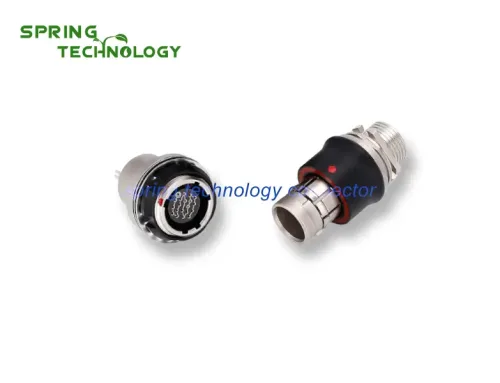
Advanced energy storage demands high-current, low-resistance power connectors capable of handling increased power densities. SPRING TECHNOLOGY’s push-pull connectors and waterproof connectors serve critical roles in battery management systems, charging infrastructure, and power distribution networks requiring reliable, high-performance electrical connectivity.
5. Robotics: Intelligent Machines in Daily Life
Robotics evolves from industrial automation to ubiquitous presence in homes, workplaces, and public spaces.
5.1 From Industrial to Collaborative Robotics
Traditional industrial robots operated isolated from human workers for safety. Modern collaborative robots (cobots) work alongside humans in factories, hospitals, warehouses, and homes. Safety sensors, force-limiting mechanisms, and intelligent collision avoidance enable safe human-robot interaction.
5.2 Advanced Materials and Neural Processing
Next-generation robots incorporate nanomaterials for lighter, stronger construction. Powerful neural processing chips run advanced deep learning algorithms enabling natural human interaction, adaptive learning, and autonomous decision-making. By 2030, robots will serve in elderly care, education, logistics, manufacturing, and emergency response.
5.3 Connector Requirements for Robotics
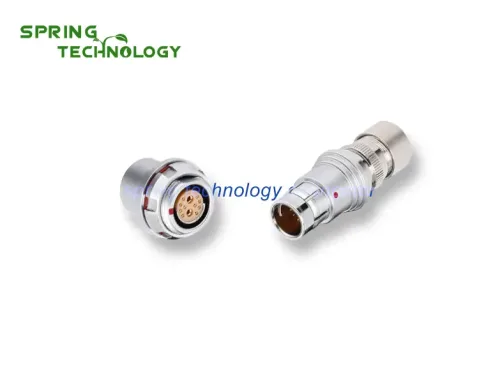
Robotic systems demand reliable circular connectors, wire-to-board connectors, and cable assemblies supporting high-speed data transmission, power distribution, and sensor integration. SPRING TECHNOLOGY provides specialized connectors for robotics applications requiring vibration resistance, repeated mating cycles, and compact form factors.
Conclusion: Converging Technologies Reshaping Our Future
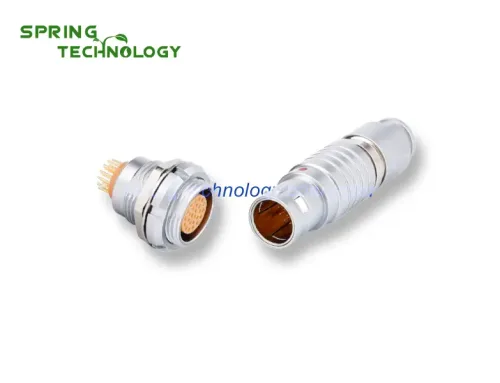
The past 20 years centered on digital technology development. The next decade (2026-2036) will witness deep technology integration transforming physical world capabilities. Advanced computer architecture enables genome and molecular-level manipulation, driving intelligent machine development. New energy storage technologies enhance utility, safety, and efficiency across all sectors. SPRING TECHNOLOGY supports these future technologies with reliable electronic connectivity solutions including push-pull self-locking connectors, waterproof connectors, wire harness assemblies, and custom connector designs. Our 1-30 core circular connector product line serves aerospace, medical, industrial, and consumer applications requiring dependable electrical connectivity in demanding environments.
Frequently Asked Questions (FAQ)
What are the five transformative technologies for 2026-2036?
The five key technologies are: new computer architecture (quantum and neuromorphic computing), genomics (personalized medicine and synthetic biology), nanotechnology (molecular engineering), energy storage technology (next-generation batteries), and robotics (intelligent autonomous systems).
When will quantum computers become commercially available?
Quantum computing commercialization is expected within 5-7 years, with working prototypes already demonstrated. Initial applications will focus on cryptography, drug discovery, and complex optimization problems.
How will genomics impact healthcare by 2030?
Genome sequencing costs will drop below $100, enabling widespread personalized medicine. Genomics combined with immunotherapy will make many cancers treatable through patient-specific genetic profiling and targeted therapies.
What connector solutions does SPRING TECHNOLOGY provide for emerging technologies?
SPRING TECHNOLOGY offers push-pull self-locking connectors, waterproof connectors, wire-to-board connectors, circular connectors (1-30 cores), and custom cable assemblies serving aerospace, medical, robotics, and energy storage applications.
How will nanotechnology change manufacturing?
By 2030, molecular-level material design becomes downloadable and manufacturable like software, enabling on-demand production of specialized materials with tailored properties, revolutionizing supply chains and manufacturing economics.
Extended Reading
Explore more technical resources from SPRING TECHNOLOGY:
Xi’an Spring Technology Co., Ltd. is a professional push-pull connector manufacturer integrating connector research and development, production and sales.
Contact us for more info and best price: [email protected], [email protected]
Visit our website: https://www.spring-connectors.com/