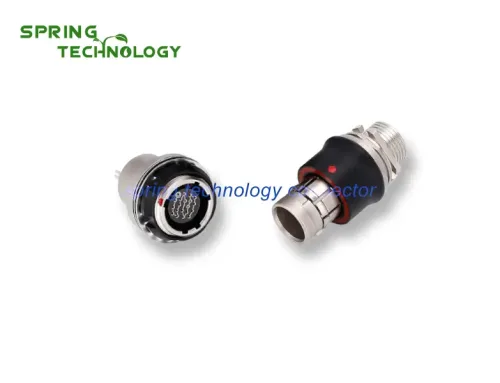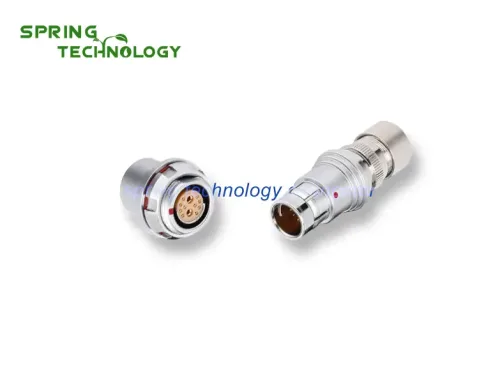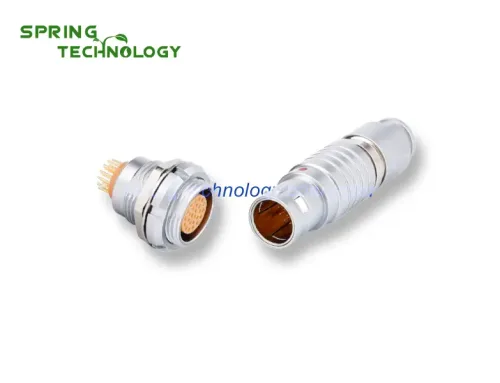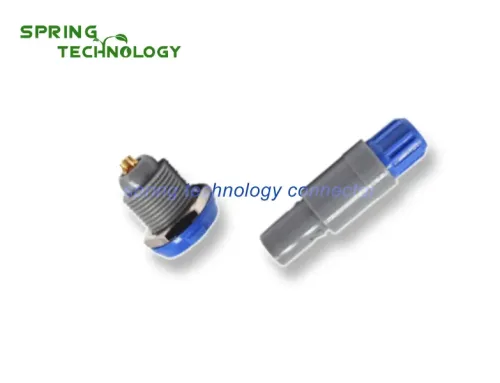


Choosing the right push-pull self-locking connector is critical for ensuring reliable electrical connections in medical, industrial, and aerospace applications. The connector selection process directly impacts device performance, safety, and long-term reliability. This comprehensive 2026 guide covers four essential selection criteria: connector type, electrical requirements, environmental conditions, and mechanical performance – helping engineers and procurement professionals make informed decisions for their specific applications.
Connector Type Selection Criteria
Mounting Configuration
The installation method determines connector housing selection. Panel-mount connectors require fixed sockets with nuts or flanges for secure chassis attachment, while cable-mounted applications need inline plugs with strain relief. Floating socket designs accommodate misalignment in tight spaces, providing up to 2mm radial float for easier mating in confined equipment enclosures.
Termination Style
Connection objectives dictate termination choices: solder terminals provide permanent, low-resistance joints for high-reliability applications; crimp terminals enable field serviceability and quick cable assembly; PCB board terminals offer direct board mounting for compact designs. SPRING push-pull self-locking connectors support 1 to 32 contact positions (1-32 cores) with solder and PCB termination options as standard configurations.
Keying and Polarization
Multi-connector systems require keying to prevent mismating. Color coding (8 standard colors), key slot positions (up to 12 keying variants), and shell size variations ensure correct mate-sequence in complex equipment. Medical and defense applications often specify unique keying to prevent dangerous cross-connections.

Electrical Requirements Assessment
Voltage and Current Ratings
Pin core size determines current-carrying capacity. Standard push-pull connectors support 3A to 30A per contact depending on shell size and contact plating. Voltage ratings range from 50V to 1500V based on insulation material and contact spacing. Always select connectors with 20% safety margin above maximum operating voltage and current to account for transient conditions and ensure long-term reliability.
Signal Integrity Parameters
High-frequency and data transmission applications require attention to characteristic impedance (50Ω, 75Ω, 100Ω differential), VSWR (voltage standing wave ratio <1.5:1 typical), insertion loss (<0.5dB up to 2GHz), and EMI shielding effectiveness (40-100dB attenuation). Coaxial and multi-pin hybrid configurations support mixed signal/power applications in medical imaging and broadcast equipment.
Contact Resistance and Voltage Drop
Low contact resistance (typically <10 milliohms for power, <50 milliohms for signal) minimizes voltage drop and heat generation. Gold plating thickness (0.05-0.8μm) affects oxidation resistance and stable low-resistance performance over thousands of mating cycles. Specify appropriate plating based on application environment and expected connector lifetime.
Environmental Conditions and Protection
Temperature Range
Operating temperature specifications must exceed application extremes. Standard connectors operate from -40°C to +85°C; extended range versions support -55°C to +150°C for aerospace and downhole applications. Consider thermal cycling effects on contact resistance and insulation properties when selecting materials for extreme environments.
Ingress Protection (IP Rating)
Indoor applications may require IP50 protection, while outdoor or washdown environments demand IP67 (temporary immersion) or IP68 (continuous submersion) ratings. Sealed push-pull connectors incorporate O-rings, potting, and gasketed shells to achieve high IP ratings without compromising quick-disconnect functionality. Medical and food processing applications often specify IP68 for sterilization compatibility.
Chemical and Corrosion Resistance
Exposure to solvents, oils, saline, or corrosive atmospheres requires appropriate shell materials (stainless steel 316L, aluminum with nickel plating) and seal compounds (Viton, silicone). Salt spray testing per ASTM B117 validates corrosion resistance for marine and coastal installations. UV-resistant materials prevent degradation in outdoor sunlight exposure.
Mechanical Performance Requirements
Insertion and Withdrawal Force
Push-pull self-locking connectors provide low insertion force (15-40N) with audible/tactile lock engagement. Withdrawal requires deliberate sleeve retraction (20-60N pull force) preventing accidental disconnection. Ergonomic sleeve designs reduce operator fatigue in high-cycle assembly and test applications.
Mating Cycle Durability
Standard push-pull connectors withstand 5,000-10,000 mating cycles while maintaining electrical performance. High-durability variants achieve 50,000+ cycles for test equipment and frequently reconfigured systems. Contact plating, spring materials, and housing wear characteristics determine operational lifetime.
Shock and Vibration Resistance
Military and transportation applications require connectors meeting MIL-STD-810 shock (50-100G) and vibration (10-2000Hz, 20G) specifications. Self-locking mechanisms prevent vibration-induced disconnection. Strain relief cable clamps protect terminations from mechanical stress during equipment operation and transport.
2026 Push-Pull Connector Market Trends and Industry Data
Global Market Growth
The global push-pull connector market reached USD 2.1 billion in 2025 and is projected to grow at a CAGR of 7.3% through 2030. Medical devices, industrial automation, and broadcast/pro AV equipment drive demand for quick-disconnect solutions with high reliability and EMI protection.
Miniaturization Trends
2026 sees increased adoption of sub-miniature push-pull connectors (shell sizes 00, 0, 1) for portable medical devices, wearables, and handheld instrumentation. High-density contact arrangements (up to 64 contacts in size 3 shells) enable compact multi-signal interfaces without sacrificing quick-disconnect benefits.
Smart Connector Technology
Emerging smart connectors integrate sensors for connection verification, mating cycle counting, and environmental monitoring. IoT-enabled connectors provide predictive maintenance data and connection status feedback for Industry 4.0 manufacturing and critical infrastructure applications.
Conclusion
Selecting the optimal push-pull self-locking connector requires systematic evaluation of connector type, electrical requirements, environmental conditions, and mechanical performance. By understanding these four critical selection criteria and applying appropriate safety margins, engineers ensure reliable, maintainable electrical connections for demanding applications. As the connector industry advances with miniaturization, smart features, and enhanced environmental protection, Xi’an Spring Technology delivers innovative push-pull solutions meeting international standards for medical, industrial, and aerospace markets.
FAQ: Push-Pull Connector Selection
What is the advantage of push-pull self-locking connectors?
Push-pull self-locking connectors provide quick, secure connection with audible/tactile feedback, preventing accidental disconnection while enabling rapid mating/unmating. The self-locking mechanism requires deliberate sleeve retraction for disconnection, ideal for medical, test, and broadcast applications requiring frequent reconfiguration.
How do I determine the correct shell size?
Shell size depends on contact count, current rating, and space constraints. Size 0 supports 2-8 contacts (3-10A), Size 1 supports 3-16 contacts (5-15A), Size 2 supports 6-32 contacts (10-30A). Consult manufacturer datasheets for specific configurations and derating factors.
What IP rating do I need for outdoor use?
Outdoor applications typically require IP67 (temporary immersion) or IP68 (continuous submersion) ratings. Sealed push-pull connectors with O-rings and gasketed shells provide environmental protection while maintaining quick-disconnect functionality for field equipment.
Can push-pull connectors handle mixed signal and power?
Yes, hybrid push-pull connectors combine power contacts (up to 30A) with signal, coaxial, fiber optic, or pneumatic channels in a single shell. This reduces cable count, simplifies mating, and ensures correct connection sequence in complex systems.
Extended Reading
Xi’an Spring Technology Co., Ltd. is a professional push-pull connector manufacturer integrating connector research and development, production and sales.
Xi’an Spring Technology Co., Ltd. is a professional push pull connector manufacturer integrating connector research and development, production and sales.
Contact me for more info and best price: [email protected], [email protected]
Visit our website: https://www.spring-connectors.com/