

Classification of Connectors 2026: Complete Guide to Connector Levels & Standards
Connector classification is fundamental to understanding electronic interconnection systems. In 1989, with the support of the National Electronic IC Distributors Association (NEDA), major connector manufacturers including Molex established the connector component classification standard known as Levels of Packaging. This comprehensive guide covers all connector levels from Level 0 to Level 4, providing essential knowledge for engineers and technicians working with electronic connections in 2026.
Understanding the Five Levels of Connector Classification
Level 0: IC Chip and Chip-to-Package Connections
Level 0 represents the integrated circuit chip itself. This is the foundational level where the semiconductor die exists before any packaging or connection. Note that Level 0 is “0” not “1” – this level does not involve actual physical connection interfaces but rather the bare IC component.
Level 1: Component-to-Board Connections
Level 1 connectors interface IC components or discrete components to the printed circuit board (PCB). When an IC chip is installed in a socket on the circuit board, this constitutes a Level 1 connection. Common examples include CPU sockets, memory module connectors, and component carriers.
Level 2: Board-to-Board Interconnections
Level 2 connectors facilitate connections between printed circuit boards. These PCB-to-PCB connectors are critical in multi-board systems where signals must pass between separate circuit boards. Applications include motherboard-daughterboard connections, mezzanine connectors, and stackable board interfaces.
Level 3: Wire-to-Board and Sub-assembly Connections
Level 3 connectors link wires to circuit boards or connect sub-assemblies to sub-assemblies. This level connects printed circuit boards with cable assemblies or joins two electronic sub-assemblies together. Sub-assemblies are integral functional units within larger electronic products.
Level 4: Chassis-to-Chassis and I/O Connections
Level 4 connectors provide chassis-to-chassis interconnections or input/output interfaces. These connectors deliver power or signal connections between complete equipment units. Typical applications include audio/video connections, network cables, computer peripherals, and external device interfaces.
Key Considerations for Connector Level Selection
Multi-Level Connector Applications
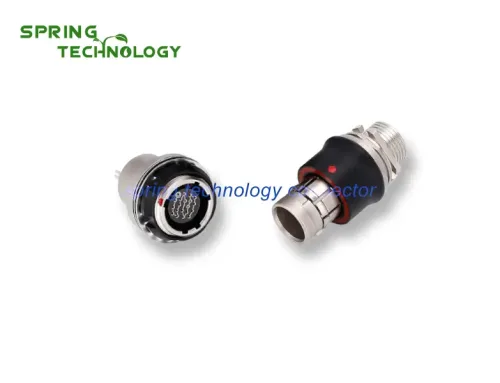
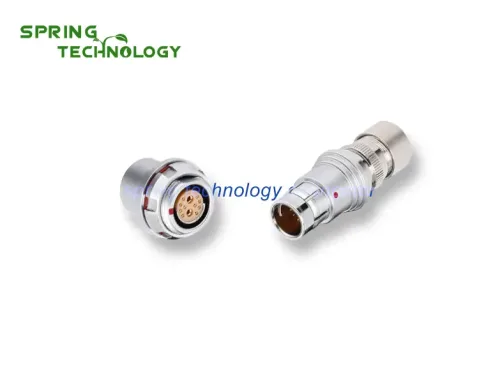
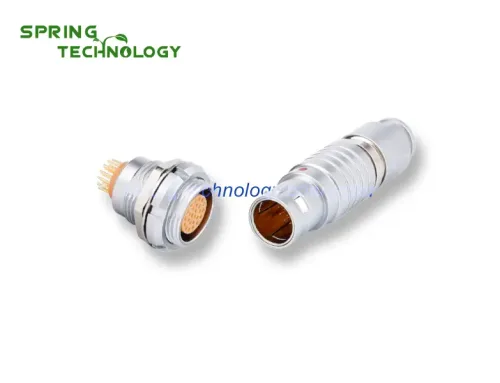
Some connectors can operate across multiple classification levels. For instance, QF50 and MX50 Level 3 connectors can also function at Level 2 or Level 4 depending on the application. Similarly, standard SPRING internal and external fixed sockets (classified as Level 4) can be adapted for wire-to-board or board-to-board connections.
Practical Classification vs. Theoretical Levels
In actual engineering practice, connectors are rarely discussed strictly by level classification. Instead, engineers typically describe connectors by their physical configuration and connection method – such as wire-to-board, wire-to-wire, board-to-board, or panel-mount. The level system serves primarily as a learning framework and classification tool rather than everyday terminology.
Industry Standards and Compliance
Modern connector classification aligns with international standards including IEC 61984, MIL-DTL-38999, and ISO/TS 16949 for automotive applications. Understanding level classification helps ensure proper connector selection for regulatory compliance and industry-specific requirements.
2026 Connector Industry Trends and Market Data
Global Connector Market Growth
The global connector market reached USD 85.2 billion in 2025 and is projected to grow at a CAGR of 5.8% through 2030. Level 3 and Level 4 connectors represent the largest segments, driven by automotive electrification, 5G infrastructure, and industrial IoT deployments.
Miniaturization and High-Density Trends
2026 sees continued demand for miniaturized connectors across all levels. Level 1 and Level 2 connectors are shrinking to accommodate higher component densities in smartphones, wearables, and compact medical devices. Pitch sizes below 0.4mm are becoming standard for board-to-board applications.
Sustainability and Environmental Standards
RoHS compliance, REACH regulations, and circular economy initiatives are reshaping connector design. Manufacturers increasingly use recyclable materials and design for disassembly, particularly in Level 3 and Level 4 connectors used in consumer electronics and automotive applications.

Conclusion
Understanding the five levels of connector classification (Level 0 through Level 4) provides a systematic framework for selecting appropriate interconnection solutions. From IC chip packaging (Level 0) to chassis-to-chassis interfaces (Level 4), each level serves distinct functions in electronic systems. Xi’an Spring Technology specializes in Level 3 and Level 4 connectors, delivering reliable solutions for PCB-to-cable and chassis I/O applications. As the connector industry evolves with miniaturization, sustainability, and smart manufacturing trends, proper level classification remains essential for optimal system design.
FAQ: Connector Classification
What is the difference between Level 2 and Level 3 connectors?
Level 2 connectors connect printed circuit board to printed circuit board (PCB-to-PCB), while Level 3 connectors connect wires to boards or sub-assembly to sub-assembly. Level 2 is board-level interconnection; Level 3 involves cable assemblies or modular sub-systems.
Can a connector be used at multiple levels?
Yes, many connectors are versatile and can function at multiple classification levels. For example, certain SPRING connectors designed for Level 4 can also be configured for Level 2 or Level 3 applications depending on mounting and termination methods.
Why is connector level classification important?
Level classification provides a standardized framework for understanding connector applications, facilitating proper selection, ensuring compatibility, and supporting industry communication. It helps engineers specify the right connector type for each interconnection point in a system.
What level connectors does Spring Technology manufacture?
Xi’an Spring Technology primarily produces Level 3 and Level 4 connectors, including push-pull self-locking connectors for wire-to-board connections and chassis I/O applications. Our products serve medical, industrial, telecommunications, and test equipment markets.
Extended Reading
Xi’an Spring Technology Co., Ltd. generally produces Level 3 or Level 4 connectors, which are mainly used for the connection between printed circuit boards and lines, and the connection between lines and the input and output of the chassis.
Xi’an Spring Technology Co., Ltd. is a professional push pull connector manufacturer integrating connector research and development, production and sales.
Contact me for more info and best price: [email protected], [email protected]
Visit our website: https://www.spring-connectors.com/