

CBTG1BG Push-Pull Connector for Battery Pack Vibration Testing 2026: 1B Series 14-Contact Plug for Sensor Signal Interfaces
The CBTG1BG-SMSM14-D62B is a CBTG1BG push-pull connector for battery pack vibration testing — a 1B series straight plug with 14 low-voltage contacts, push-pull self-locking, a cable collet and nut for bend-relief accessories, minimum shielding of 75 dB at 10 MHz and 40 dB at 1 GHz, IP50 protection, a 5,000-cycle mating specification, solder termination, a 1B platform cable opening range of 2.2–7.5 mm and operation from -45 °C to +125 °C. Every specification in this guide is backed by the battery reliability test equipment interconnect engineering of Spring Technology.
Pain point: Wiring multi-point acceleration and temperature sensors around a battery pack on a vibration table — where fixtures change per pack design, sensor cables are reconnected dozens of times, cable weight hangs on the connector under vibration, and the interface must never be confused with battery power?
Core answer: Spring Technology supplies the CBTG1BG-SMSM14-D62B for evaluation in suitable low-voltage signal connections in sensor cable assemblies used around the test fixture or monitoring equipment, offering 14 low-voltage contacts, push-pull locking and a durable interface for repeated test setup and maintenance. Industrial battery packs used in electric vehicles, energy storage equipment and mobile industrial machinery undergo vibration and mechanical reliability testing before deployment, helping engineers evaluate structural integrity, connector retention, sensor response and battery assembly performance under defined mechanical conditions. A battery pack vibration testing system typically includes a vibration table, test fixture, acceleration sensors, temperature monitoring devices and a data acquisition unit — and the connector is not a battery power connector, so it should not be assumed suitable for carrying high-current battery output.
1. Technical Parameters & Engineering Standards
This CBTG1BG push-pull connector for battery pack vibration testing is built on the TGG 1B platform, a compact circular connector family for industrial test and monitoring equipment.
- Latching Mechanism: Push-pull self-locking (convenient mating and unmating without a threaded coupling operation)
- Recommended Hardware: Spring Technology Circular Connector and custom cable assembly service
- Key Metric: 14 low-voltage contacts; push-pull locking; IP50; 5,000 mating cycles
| Parameter | Value |
|---|---|
| Plug (this order) | CBTG1BG-SMSM14-D62B — TG straight plug, 1B shell, key G, 14 contacts |
| Contacts | 14 low-voltage contacts |
| Termination | Solder, with cable collet and nut for bend-relief accessories |
| Cable diameter | Cable opening 2.2–7.5 mm (1B platform) |
| Shielding | Min. 75 dB at 10 MHz, 40 dB at 1 GHz |
| Protection | IP50 (protected environments) |
| Mating cycles | 5,000 mating cycles |
| Shock resistance | 100 g · 6 ms |
| Vibration resistance | 10~20000 Hz, 15 g |
| Pin counts available | 2–16 pins across the 1B shell |
| Operating temperature | -45 °C ~ +125 °C (1B platform) |
| Housing | Chrome-plated brass shell with PPS insulator |
Note: the actual number of supported sensor channels depends on the measurement system, sensor type, shielding arrangement and pin assignment. The connector must not be used beyond its specified electrical ratings, and it should be limited to circuits that meet those specifications.
2. CBTG1BG-SMSM14-D62B Connector Design Highlights
Vibration laboratories reconfigure constantly. The design advantages below explain why this CBTG1BG push-pull connector for battery pack vibration testing suits sensor signal interfaces:
2.1 Fourteen Contacts for Multiple Signal Connections
- Battery pack vibration tests may monitor several measurement points, including fixture acceleration, structural response and auxiliary sensor signals. Fourteen low-voltage contacts consolidate multiple suitable signal circuits into one detachable connection rather than several separate connectors, simplifying cable routing and making test-system wiring easier to document.
2.2 Push-Pull Locking for Efficient Test Setup
- Vibration test systems require repeated setup changes as engineers install different test fixtures, reposition sensors or replace monitoring cables. The push-pull self-locking mechanism supports convenient mating and unmating without a threaded coupling operation, helping technicians connect compatible sensor cable assemblies more efficiently during routine setup and maintenance. Correct mating compatibility must be confirmed, and the connector should be inspected regularly for contamination or damage.
2.3 Cable Retention Support for Repeated Handling
- Sensor cables in a test laboratory are moved and reconnected frequently. The connector includes a cable collet and nut intended to accommodate bend-relief accessories; when assembled according to the manufacturer’s instructions, the cable fixation arrangement organises the cable termination and reduces stress concentration near the connector. Appropriate cable routing and strain relief are especially important under vibration — the connector itself should not be treated as a substitute for securing the cable and test fixture.
2.4 A Defined Interface for Modular Test Fixtures
- Different battery pack designs require different mounting fixtures, sensor positions or monitoring configurations. A detachable connector interface simplifies exchanging compatible sensor cables or fixture assemblies, and the 14-contact configuration provides flexibility for assigning suitable auxiliary circuits within a documented wiring scheme — helping laboratories standardise connections across test configurations while adapting fixtures to different pack geometries. Any replacement cable must maintain the approved pin mapping and electrical characteristics.
2.5 Shielding Characteristics for Signal-System Design
- The published specifications list minimum shielding values of 75 dB at 10 MHz and 40 dB at 1 GHz for this connector model — relevant when engineers assess electromagnetic compatibility in a test setup containing vibration-table drives, power electronics and data acquisition equipment. Actual noise performance depends on the complete system, including cable shielding, grounding, connector termination and acquisition hardware; the shielding specification alone does not guarantee measurement accuracy.
2.6 Designed for Repeated Mating Cycles
- Specified for 5,000 mating cycles, the connector suits test equipment that is repeatedly configured, maintained and reused across different projects. Its IP50 rating is intended for protected environments and does not mean the connector is waterproof — test laboratories should assess whether additional protection is necessary for dust, moisture or other site-specific conditions.
3. Why Consider the CBTG1BG-SMSM14-D62B for Battery Vibration Testing?
Battery pack vibration testing requires organised sensor wiring, repeatable test setup and practical maintenance procedures. A suitable multi-contact connector consolidates signal connections and provides a defined interface between sensor cable assemblies and monitoring equipment. The CBTG1BG-SMSM14-D62B combines:
- 14 low-voltage contacts for multi-point sensor wiring
- Push-Pull self-locking for rapid fixture changes
- Cable collet and nut for bend-relief and strain relief
- Shielding of at least 75 dB at 10 MHz and 40 dB at 1 GHz
- A specified 5,000-cycle mating life
- Cable opening range of 2.2–7.5 mm for common sensor cables
These features make it a candidate for evaluation in sensor and auxiliary signal cable assemblies used in protected test environments. Before selection, engineers should confirm the compatible receptacle, contact assignments, cable diameter, signal characteristics and environmental requirements. The connector must not be used beyond its specified electrical ratings.
4. 1B Series Connector Family Overview
The 1B shell belongs to Spring Technology’s push-pull connector family for industrial test, measurement and control equipment. The same platform serves this CBTG1BG push-pull connector for battery pack vibration testing and scales across pin counts and contact variants.
4.1 Available Configurations
- Plugs: TG 1B straight plugs including bend-relief versions and the 14-contact layout in this order.
- Receptacles: fixed sockets for panel mounting and cable-mount versions.
- Pin counts: 2–16 contacts across the 1B shell.
- Termination: solder with cable collet; PCB contact options on receptacle bodies.
4.2 Customization Services
- Custom contact allocations and part numbers (such as the CBTG1BG-SMSM14-D62B) matched to each test system’s wiring scheme.
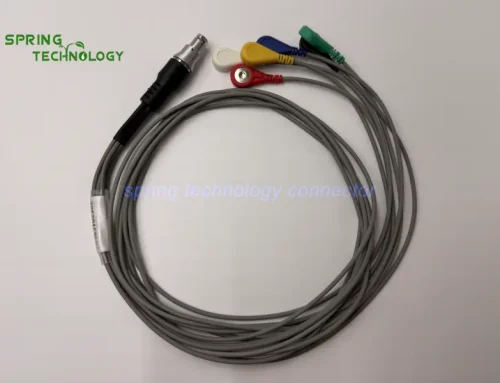
- Sensor cable assembly builds with defined cable opening ranges and bend relief.
- Shielding and EMC verification for acceleration and temperature signal circuits.
- Mating receptacle selection support, including keying and contact-layout confirmation.
5. Applications: Battery Reliability and Vibration Testing
These are potential engineering applications for this CBTG1BG push-pull connector for battery pack vibration testing, based on the connector’s configuration — not verified installations in specific battery testing products:
5.1 Battery Pack Vibration Testing Sensor Interfaces
Sensor interfaces for battery pack vibration testing and mechanical reliability test fixture monitoring.
5.2 Multi-Point Acceleration Monitoring
Multi-point acceleration monitoring cable assemblies and industrial energy storage module validation equipment.
5.3 Environmental Test Laboratories
Auxiliary low-voltage signal connections in environmental test laboratories and automotive battery validation benches.
6. Frequently Asked Questions (FAQ)
Conclusion & Call to Action
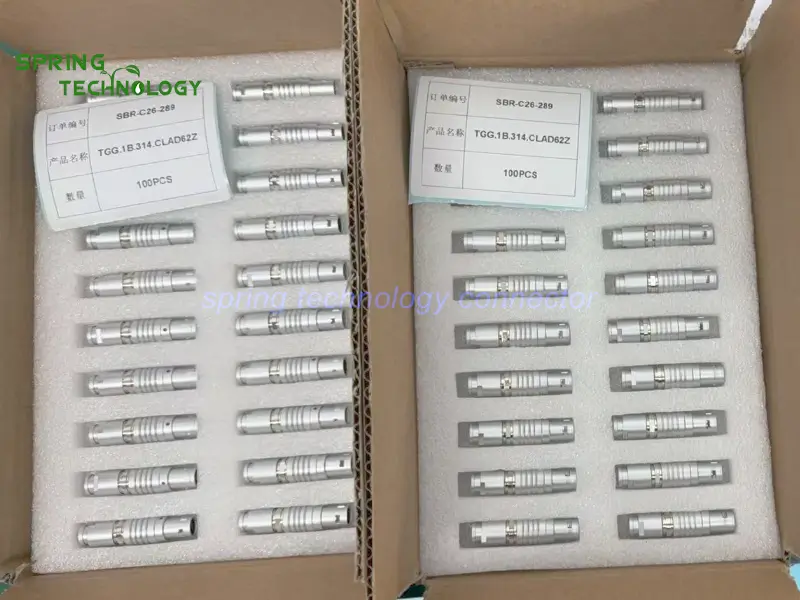
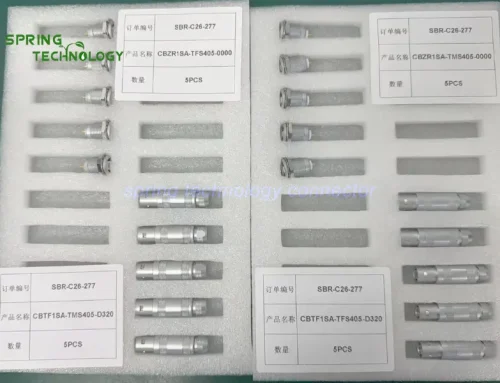
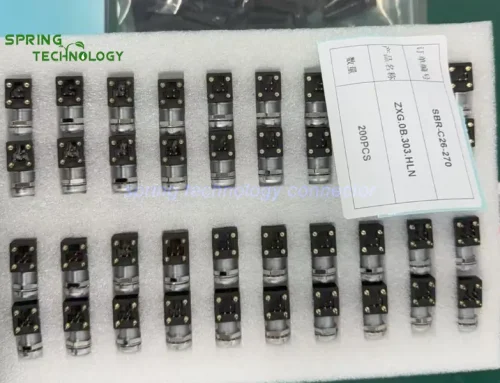
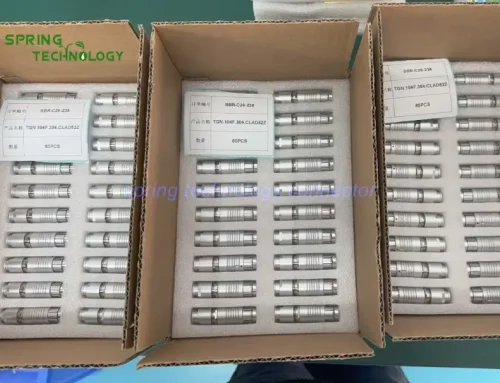
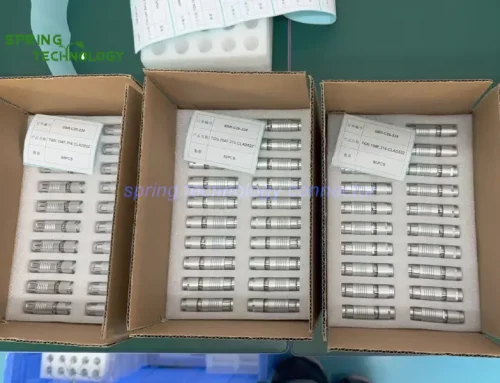
This 1B connector delivery shows how Spring Technology serves battery reliability testing laboratories — from the 14 consolidated sensor contacts and cable collet of the CBTG1BG-SMSM14-D62B to its shielding and 5,000-cycle life, every detail was aligned with the customer’s battery pack vibration testing requirements. Spring Technology also provides professional customization services for both push-pull connectors and cable assemblies, offering tailored solutions to meet your specific technical requirements.
For more information about our 1B series connectors or to discuss your requirements, contact us at [email protected] or [email protected], or visit our website.
Building a battery pack vibration test bench or multi-point sensor harness? Send us your measurement and cabling requirements — our engineering team will respond with a tailored CBTG1BG push-pull connector proposal for your battery pack vibration testing systems within 24 hours.
Further Reading
- CBTG31FA Push-Pull Connector for Vibration Testing 2026: 31F Series 10-Pin Connector for Portable Data Acquisition Instruments for German Client
- CBTG2BG Push-Pull Connector for Battery Module Charge-Discharge Testers 2026: 2B Series 8-Contact 10 A Plug for Battery Test Interfaces
- BBZX0BG Push-Pull Connector for Vibration Calibrators 2026: 0B Series 3-Contact Elbow PCB Socket for Portable Calibration Instruments
- Push-Pull Connector for Automotive Testing 2026: CBTG1KG-SMSM06-D32Z Plug and Matching Dust Cover for Off-Road and Winter Prototype Testing for Italian Customers
- CBTG1BG Push-Pull Connectors for Industrial 3D Laser Scanners 2026: SMSM02 15 A Power Plug and SMSM08 1 Gb/s Data Plug for Scanner Systems
- TGG.1B Connector — Product Page
- Custom Cable Assembly — Service Page
- 1B Series Connector