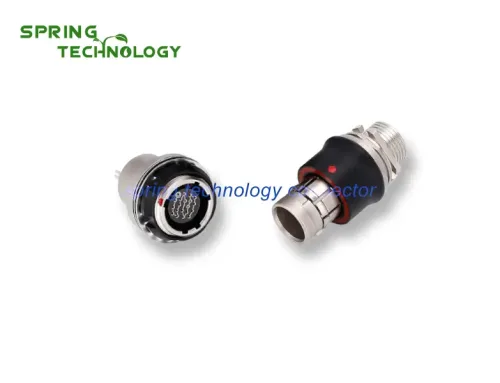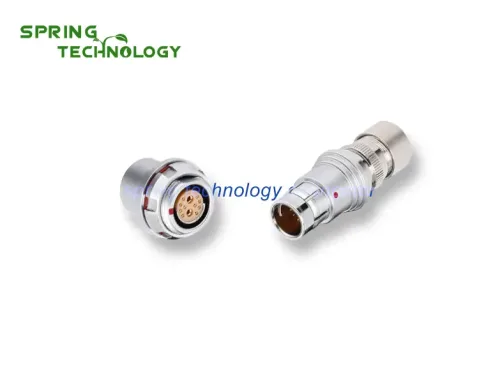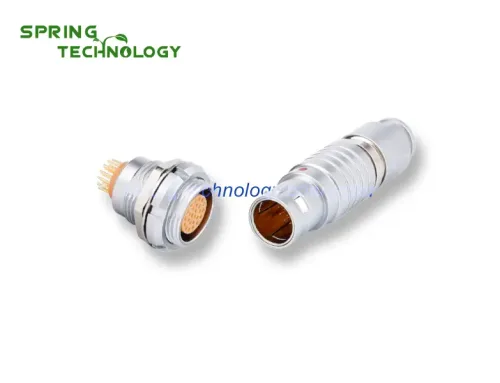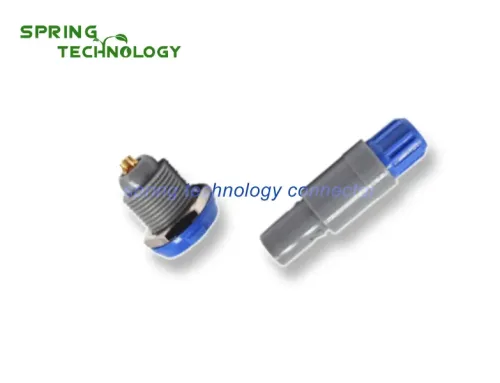


Connector plating is a critical factor determining the performance, durability, and reliability of push-pull circular connectors. The three primary plating types—nickel plating, tin plating, and gold plating—each serve distinct purposes in connector design. Our push-pull connectors feature nickel coating on the exterior housing with gold-plated contacts for optimal electrical performance.
According to 2025 industry data, the global connector plating market is valued at $4.2 billion, with gold plating accounting for 42% of high-reliability applications in medical, aerospace, and defense sectors. The choice of connector plating directly impacts contact resistance, corrosion resistance, wear durability, and total cost of ownership.
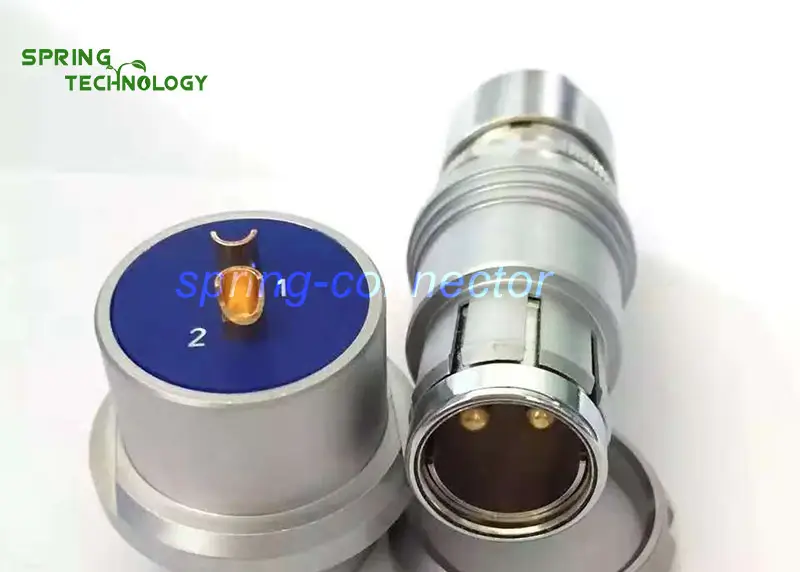
Why Connector Plating Matters: The Three Key Functions
Connector plating serves three fundamental purposes in electrical connection systems:
1. Corrosion Protection
The primary function of metal plating is to protect the base metal (typically copper alloy) from environmental degradation. Copper contacts are highly susceptible to oxidation and sulfidation in typical operating environments. The plating layer creates a barrier between the contact spring and the working environment, preventing corrosion that would increase contact resistance and cause connection failures.
2. Electrical Performance Optimization
Proper connector plating helps establish and maintain stable connector impedance. Different plating materials offer varying levels of electrical conductivity, with gold providing the lowest contact resistance (<5mΩ) and most consistent signal transmission across mating cycles.
3. Mechanical Durability Enhancement
The plating layer adds wear resistance and durability to the connector interface. Hardness, ductility, and coefficient of friction are critical mechanical properties affected by plating choice. These characteristics determine the connector mating cycle life and performance under repeated connection/disconnection operations.
Types of Connector Plating: Detailed Comparison
Gold Plating (Au)
Advantages:
- Lowest contact resistance (<5mΩ)
- Excellent corrosion resistance
- Superior conductivity (99.9% pure gold)
- No oxidation under normal conditions
- Ideal for low-voltage signal applications
- Mating cycle life: 500-10,000 cycles (depending on thickness)
Applications:
- Medical device connectors
- Aerospace and defense systems
- High-reliability test equipment
- Telecommunications infrastructure
- Precision instrumentation
Gold plating thickness varies by application:
- Flash gold (0.05-0.1μm): Cost-sensitive applications, 50-100 mating cycles
- Standard gold (0.3-0.5μm): Industrial connectors, 500-1,000 cycles
- Heavy gold (1.0-2.5μm): High-reliability applications, 5,000-10,000 cycles
Nickel Plating (Ni)
Advantages:
- High hardness and wear resistance
- Excellent barrier properties
- Good corrosion resistance
- Forms protective passive film
- Cost-effective for housing protection
- Temperature resistance: -55°C to +400°C
Applications:
- Connector housing exterior
- Underplating for gold contacts
- Harsh environment connectors
- High-temperature applications
- Industrial automation equipment
Nickel plating offers exceptional stability in air due to strong passivation ability. The electroplated nickel crystals are extremely fine with excellent polishing properties, providing a mirror-like appearance that maintains luster long-term.
Tin Plating (Sn)
Advantages:
- Lowest cost option
- Good solderability
- Adequate corrosion resistance
- Environmentally friendly (RoHS compliant)
- Suitable for crimp contacts
- Cost savings: 60-80% vs gold
Applications:
- Consumer electronics
- Automotive wiring harnesses
- Low-cost industrial connectors
- Single-use or limited-cycle applications
- Board-to-board connectors
Tin plating limitations: Prone to whisker growth, limited mating cycles (50-200), susceptible to fretting corrosion under vibration.

Plating Selection Criteria by Application
Medical Device Connectors
Recommended: Gold plating (0.5-1.0μm) over nickel underplating
Medical applications demand the highest reliability for patient safety. Gold plating ensures consistent low contact resistance for sensitive diagnostic signals and withstands repeated sterilization cycles.
Industrial Automation Connectors
Recommended: Gold plating (0.3-0.5μm) for contacts, nickel plating for housing
Factory environments expose connectors to vibration, temperature fluctuations, and contaminants. The nickel-gold combination provides optimal balance of durability and electrical performance.
Telecommunications Infrastructure
Recommended: Gold plating (0.8-1.5μm) for RF and signal contacts
5G networks and fiber optic systems require ultra-low signal loss and long-term reliability in outdoor installations. Heavy gold plating minimizes insertion loss and prevents oxidation over 20+ year service life.
Defense and Aerospace
Recommended: Gold plating (1.0-2.5μm) with nickel barrier layer
Military specifications (MIL-DTL-38999) mandate gold plating for critical connections exposed to extreme temperatures, salt spray, and high-altitude conditions.
2026 Industry Trends in Connector Plating Technology
The connector plating industry continues evolving with several key developments:
- Nano-coatings: Emerging graphene and carbon nanotube coatings offer conductivity approaching gold at reduced cost (pilot stage, 2025-2027)
- Selective plating: Automated processes apply different plating materials to specific contact zones, optimizing performance and cost
- Environmental compliance: Stricter RoHS and REACH regulations drive development of lead-free, hexavalent-chrome-free plating chemistries
- Hybrid plating: Palladium-nickel (PdNi) alloys gaining traction as gold alternative in mid-tier applications (30% cost reduction)
- Thickness monitoring: X-ray fluorescence (XRF) inline inspection ensures consistent plating thickness with ±0.05μm tolerance
- Sustainable practices: Closed-loop plating baths recover 95%+ of precious metals, reducing environmental impact and material costs
Plating Failure Modes and Prevention
Common Failure Mechanisms
- Fretting corrosion: Micro-motion between contacts wears through plating, exposing base metal (prevented by adequate gold thickness)
- Porous corrosion: Environmental contaminants penetrate thin plating defects (mitigated by nickel underplating)
- Galvanic corrosion: Dissimilar metal contact accelerates degradation (avoided by compatible material selection)
- Thermal degradation: High temperatures cause intermetallic diffusion between plating layers (prevented by barrier layers)
Conclusion
Choosing the right connector plating is essential for ensuring optimal performance, reliability, and cost-effectiveness in electrical connection systems. Gold plating remains the premium choice for high-reliability applications requiring low contact resistance and long mating cycle life. Nickel plating provides excellent barrier protection and mechanical durability for connector housings and underplating. Tin plating offers a cost-effective solution for applications with limited mating cycles and less demanding environmental conditions.
When selecting push-pull circular connectors for your application, consider factors including operating environment, required mating cycles, electrical performance specifications, and total cost of ownership. Proper plating specification ensures reliable connections throughout the product lifecycle while avoiding premature failures and costly downtime.
As connector technology advances toward miniaturization, higher data rates, and harsher operating conditions, metal plating innovation will continue playing a critical role in enabling next-generation electrical interconnection solutions.
Frequently Asked Questions (FAQ)
Q1: How thick should gold plating be for industrial connectors?
A: For industrial applications, gold plating thickness of 0.3-0.5μm (12-20 microinches) over nickel underplating provides optimal balance of performance and cost, supporting 500-1,000 mating cycles. High-reliability applications may require 1.0μm or more.
Q2: Can I mix gold-plated and tin-plated connectors?
A: Generally not recommended. Galvanic corrosion can occur when gold contacts mate with tin-plated surfaces, especially in humid environments. Use matching plating materials for reliable long-term connections.
Q3: Why is nickel used as underplating for gold contacts?
A: Nickel underplating serves as a diffusion barrier, preventing gold from migrating into the copper base metal over time. It also provides mechanical support, reduces porosity, and improves overall corrosion resistance.
Q4: How many mating cycles can gold-plated connectors withstand?
A: Mating cycle life depends on gold thickness: flash gold (0.05μm) supports 50-100 cycles, standard gold (0.5μm) handles 500-1,000 cycles, and heavy gold (2.5μm) achieves 5,000-10,000 cycles with proper lubrication.
Q5: Is tin plating suitable for outdoor applications?
A: Tin plating has limited corrosion resistance and is prone to whisker growth in humid environments. For outdoor applications, gold or nickel plating with appropriate sealing (IP67/IP68) is strongly recommended.
Extended Reading
- How does push-pull circular connector work? – Understanding the self-latching mechanism and connector operation principles
- Learn to distinguish connectors, terminals, and connectors – Fundamental connector terminology and classification guide
- Automotive connectors have harsh requirements for temperature resistance of materials – Environmental challenges in connector material selection