

CBZG1BG Panel Receptacles for Surface Roughness Testers 2026: 1B Series 3, 4 and 5-Contact Push-Pull Sockets
The CBZG1BG-SFSM03-0000, CBZG1BG-SFSM04-0000 and CBZG1BG-SFSM05-0000 are CBZG1BG panel receptacles for surface roughness testers — ZGG.1B fixed sockets with 3, 4 and 5 low-voltage contacts respectively, push-pull locking, front-mounted panel installation with nut fixing and an M12 panel drill hole, solder termination, IP50 protection, a specified endurance of 5,000 mating cycles and operation from -45 °C to +125 °C. Every specification in this guide is backed by the portable metrology instrument interconnect engineering of Spring Technology.
Pain point: Giving a handheld roughness tester’s probe and accessory connections a defined, serviceable entry point — where the housing is small, the same instrument platform is offered with different circuit counts, and the panel joint is opened repeatedly for probe changes and calibration?
Core answer: Spring Technology offers these panel receptacles as potential connector options for panel-mounted interfaces in portable surface roughness testers, supporting reliable electrical connections, multiple contact configurations, compact panel mounting and repeatable connections for industrial surface measurement. A portable surface roughness tester evaluates the texture and finish of manufactured components, helping quality-control teams measure surface characteristics on machined metal parts, precision components, automotive components and other industrial workpieces. A typical system includes a measurement probe, signal-processing electronics, a display and a power supply — and depending on the equipment design, electrical connections may be required between the probe assembly, the instrument body and external accessories. The appropriate model depends on the number of electrical circuits required and the system’s electrical specifications.
1. Technical Parameters & Engineering Standards
All three receptacles are built on the ZGG.1B fixed socket platform, the panel-mount receptacle partner to the TG 1B plug family.
- Latching Mechanism: Push-pull locking mechanism (connect and release a compatible plug without a threaded coupling operation)
- Recommended Hardware: Spring Technology Circular Connector
- Key Metric: 3, 4 and 5 low-voltage contacts; M12 panel drill hole; IP50; 5,000 mating cycles
1.1 Three Contact Configurations Compared
| Model | Contacts | Potential role |
|---|---|---|
| CBZG1BG-SFSM03-0000 | 3 | Suitable for designs requiring three electrical connections |
| CBZG1BG-SFSM04-0000 | 4 | Provides an additional circuit for compatible signal or control arrangements |
| CBZG1BG-SFSM05-0000 | 5 | Allows more electrical connections within the same general connector size |
1.2 Shared ZGG.1B Platform Specifications
| Parameter | Value |
|---|---|
| Series | ZGG.1B fixed socket (panel receptacle) |
| Mounting | Fixed, front-mounted panel receptacle with nut fixing, M12 panel drill hole |
| Protection | IP50 (not waterproof) |
| Pin counts available | 2–16 pins across the 1B shell |
| Termination | Solder (female pins) |
| Mating cycles | 5,000 mating cycles (published specification) |
| Operating temperature | -45 °C ~ +125 °C (1B platform) |
| Vibration resistance | 10~20000 Hz, 15 g |
| Shock resistance | 100 g · 6 ms |
| Salt spray | >48 h |
| Keying | Key G or keys A…M and R to prevent mismating |
| Housing | Chrome-plated shell with PPS insulator |
Note: the contact count alone does not establish a particular wiring scheme — actual pin assignments must be defined by the instrument’s electrical design, and current and voltage requirements must be verified for every circuit.
2. ZGG.1B Series Receptacle Design Highlights
Metrology instruments are opened and reconnected routinely. The design advantages below explain why these CBZG1BG panel receptacles for surface roughness testers suit panel-mounted interfaces:
2.1 Push-Pull Locking for Quick Connections
- Portable measurement equipment may need to be connected and disconnected during probe replacement, maintenance or instrument setup. The push-pull locking mechanism lets users connect and release a compatible plug without relying on a threaded coupling operation — making routine probe or cable changes more convenient and reducing connection handling time.
2.2 Three Contact Configurations for Different Designs
- The three receptacles provide different low-voltage contact counts — 3, 4 and 5 contacts — giving equipment designers flexibility when allocating power, signal, identification or control circuits. The additional contacts of the 4- and 5-contact versions provide one or two more circuits within the same general connector size.
2.3 Panel-Mount Installation for a Clean Equipment Interface
- The receptacles are fixed, front-mounted panel types with nut fixing and an M12 panel drill hole, according to the published product information. This arrangement provides a dedicated connection point on the tester housing; a properly designed panel interface organises cable connections and makes the connector easier to access during inspection and servicing.
2.4 Designed for Repeated Mating
- The published specifications list an endurance of 5,000 mating cycles for these models — useful for equipment interfaces connected and disconnected repeatedly during normal operation or maintenance. In a portable surface measurement system, a suitable connector helps maintain a consistent connection interface over repeated use, provided it is correctly installed and operated within its specified conditions.
2.5 Shielding Support for Measurement Electronics
- The manufacturer lists shielding performance for the ZGG.1B series. In a surface roughness tester, shielding and appropriate cable routing may help reduce the influence of electromagnetic interference on sensitive measurement signals. Actual measurement performance depends on the entire system — cable shielding, grounding, connector termination, circuit design and the probe electronics — so the connector alone cannot guarantee measurement accuracy.
2.6 Compact Connection Design for Portable Instruments
- Portable metrology equipment must balance portability, usability and reliable electrical connections. The 1B connector format provides a compact panel interface for designers to consider when space is limited; the best configuration should be selected after checking panel space, cable routing, contact count, current requirements and compatibility with the mating plug.
3. Choosing Between the 3, 4 and 5-Contact Versions
The key distinction between these models is their number of low-voltage contacts: the 3-contact version suits simpler connection schemes, while the 4-contact and 5-contact versions offer additional circuit capacity. Before selecting a receptacle for a surface roughness tester, engineers should confirm:
- The required number of contacts and pin assignments
- Current and voltage requirements for every circuit
- Compatibility with the mating plug and keying arrangement
- Panel cutout and mounting dimensions (M12 panel drill hole)
- Environmental conditions, including dust, moisture, vibration and temperature
- Whether the connector’s IP50 rating is appropriate for the intended operating environment
The ZGG.1B series is specified as IP50, so it should not be treated as a waterproof connector or assumed suitable for direct exposure to coolant, washdown or outdoor weather without additional system-level protection.
4. 1B Series Connector Family Overview
The 1B shell belongs to Spring Technology’s push-pull connector family for portable instruments and industrial measurement equipment. The same platform serves these CBZG1BG panel receptacles for surface roughness testers and scales across plugs, sockets and contact variants.
4.1 Available Configurations
- Sockets: ZGG.1B fixed panel receptacles in 3, 4, 5 and higher contact-count layouts.
- Plugs: TG 1B straight plugs, including bend-relief versions, as the mating partner.
- Pin counts: 2–16 contacts across the 1B shell.
- Keying: key G or keys A…M and R to prevent mismating across instrument variants.
4.2 Customization Services
- Custom contact allocations and part numbers (such as the CBZG1BG-SFSM03/04/05-0000) matched to each instrument’s circuit plan.
- Panel cutout and mounting customization for compact metrology housings.
- Shielding and grounding verification for measurement signal circuits.
- Mating plug selection support, including keying and contact-layout confirmation.
5. Applications: Portable Surface Metrology Instruments
These are potential engineering applications for these CBZG1BG panel receptacles for surface roughness testers, based on the connector configuration — not verified installations in specific instrument brands or models:
5.1 Portable Surface Roughness Testers
Panel-mounted interfaces in portable surface roughness testers and surface finish measurement instruments.
5.2 Precision Component Quality Control
Quality-control stations for machined metal parts, precision components and automotive components.
5.3 Replaceable Probe and Accessory Interfaces
Detachable probe and accessory interfaces in portable industrial metrology equipment.
6. Frequently Asked Questions (FAQ)
Conclusion & Call to Action
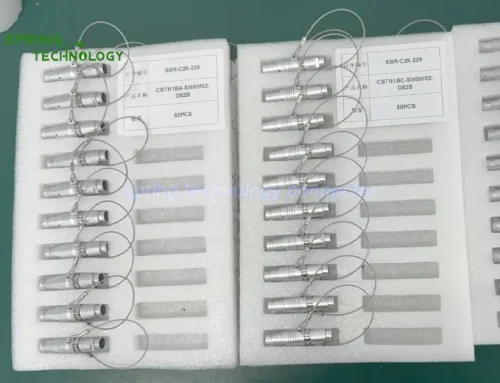
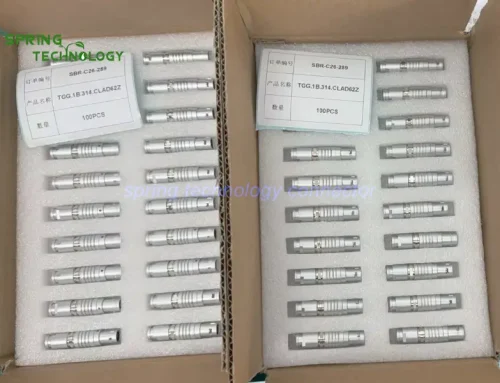
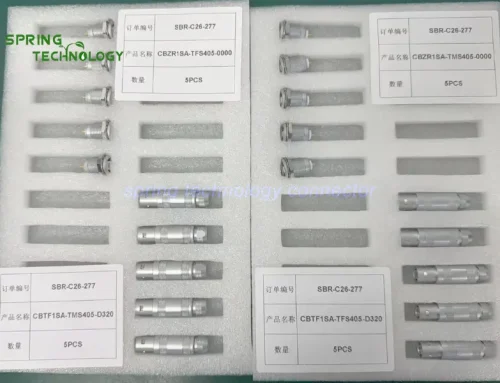
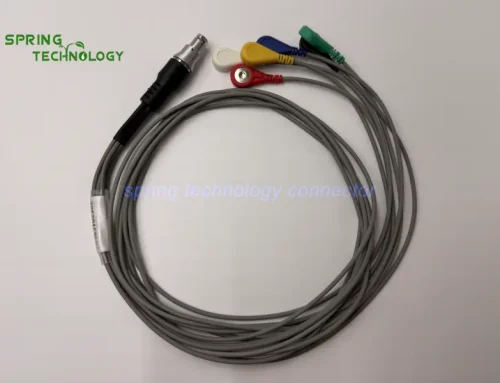
This 1B receptacle delivery shows how Spring Technology serves portable metrology instruments — from the 3, 4 and 5-contact options of the CBZG1BG-SFSM03/04/05-0000 to their M12 panel mounting, push-pull locking and 5,000-cycle endurance, every detail was aligned with the customer’s surface roughness tester requirements. Spring Technology also provides professional customization services for both push-pull connectors and cable assemblies, offering tailored solutions to meet your specific technical requirements.
For more information about our 1B series connectors or to discuss your requirements, contact us at [email protected] or [email protected], or visit our website.
Building a surface roughness tester or portable metrology instrument? Send us your panel and circuit requirements — our engineering team will respond with a proposal for these CBZG1BG panel receptacles for surface roughness testers within 24 hours.
Further Reading
- CBTG2FN Push-Pull Connector for Precision Machine Tools 2026: CBTG2FN-SMSM09-D520 and CBZL2FN-SFPM09-S000 for Multi-Channel Miniature Sensor Aggregation for Russian Client
- CBTG1BG Push-Pull Connector for CMM Probe Heads 2026: 1B Series 16-Contact 2 A Plug for Motorised Probe Head Cable Assemblies
- CBZE0BG Push-Pull Connector for Handheld XRF Analyzers 2026: 0B Series 4-Contact 7 A Receptacle for Compact Analytical Instruments
- CBZG00BG Push-Pull Connector for Insulation Resistance Testers 2026: 00B Series 4-Contact M7 Panel Socket for Portable Test Instruments for US Client
- BBZX0BG Push-Pull Connector for Vibration Calibrators 2026: 0B Series 3-Contact Elbow PCB Socket for Portable Calibration Instruments
- ZGG.1B Fixed Socket — Product Page
- 1B Series Connector