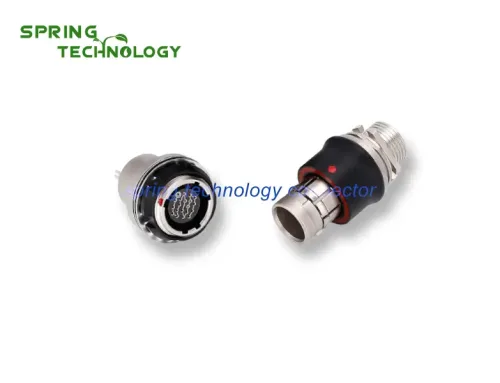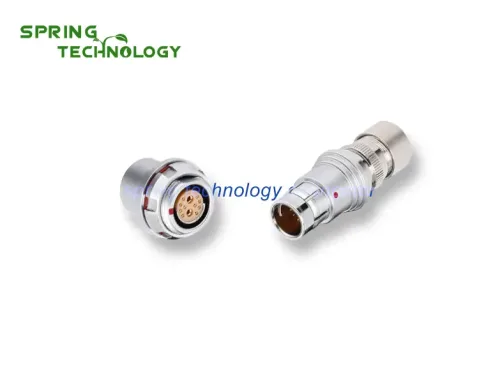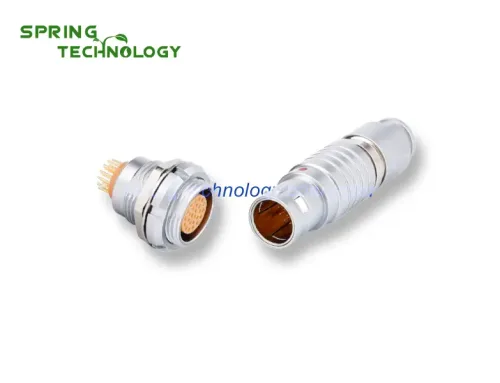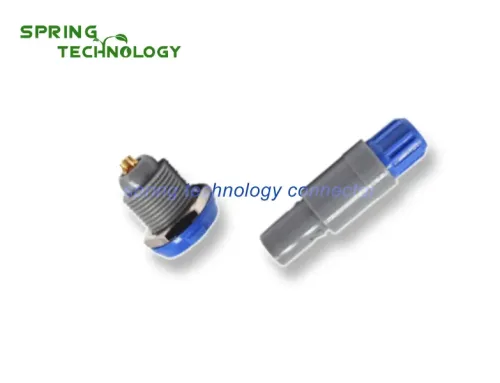


Circular connectors represent one of the most versatile and widely-used electrical interconnection solutions in modern electronics. These cylindrical connection devices feature a circular cross-section design that provides natural structural firmness and higher mechanical strength compared to rectangular alternatives. Circular electrical connectors include low-frequency circular connectors, RF coaxial connectors, audio connectors, and similar cylindrical interconnection products. With connection terminals ranging from two to several hundred contacts, circular connectors deliver compact size, high reliability, and robust performance for cable connections between electronic equipment.
According to 2025 industry data, the global circular connector market is valued at $18.8 billion, with applications spanning aerospace, defense, industrial automation, medical devices, telecommunications, and transportation sectors. The inherent advantages of cylindrical geometry—including superior EMI shielding, environmental sealing, and vibration resistance—make circular connectors the preferred choice for demanding applications requiring reliable electrical continuity under harsh conditions.

Connector Classification: Understanding the Five Interconnection Levels
Before examining circular connectors specifically, understanding the broader connector classification system provides essential context. Electronic equipment interconnection divides into five hierarchical levels based on internal and external connection functions:
Level 1: Chip Package Internal Connection
The most fundamental interconnection level involves connections within integrated circuit packages, bonding wires connecting semiconductor dies to package leads.
Level 2: IC Package to PCB Connection
Integrated circuit package pins connect to printed circuit boards through sockets or direct soldering. Typical products include IC sockets, pin grid arrays (PGA), and surface-mount packages.
Level 3: PCB to Wire/Board Connection
Printed circuits connect to conductors or other printed circuit boards. Typical connectors include printed circuit board connectors, wire-to-board connectors, and board-to-board stacking connectors.
Level 4: Subassembly to Subassembly Connection
Connection between circuit boards or subassemblies within equipment chassis. Typical products include backplane connectors, mezzanine connectors, and cabinet connectors.
Level 5: Equipment-to-Equipment Connection
Device-to-device interconnection represents the highest interconnection level. Circular connectors are typical products at this level, providing external cable connections between complete electronic systems.
Technical Classification Methods for Connectors
While the five-level interconnection system provides functional classification, connector products follow two fundamental technical classification methods:
Classification by Operating Frequency
Connectors divide into low-frequency and high-frequency categories based on operating frequency:
- Low-Frequency Connectors: Operating below 3 MHz boundary (aligned with radio wave frequency division)
- High-Frequency Connectors: Operating above 3 MHz, including RF and microwave applications
Classification by External Structure
Connector cross-sectional shape determines structural classification:
- Circular Connectors: Cylindrical cross-section providing uniform strength distribution
- Rectangular Connectors: Rectangular or trapezoidal cross-section (including printed circuit connectors, which historically separated from rectangular category)
- Coaxial Connectors: Specialized circular structure for RF applications with concentric conductors
Among all connector geometries, circular connectors represent the most common and versatile configuration.
Circular Connector Design Advantages
Superior Mechanical Strength
The cylindrical structure of circular connectors provides natural firmness and higher strength than any other shape. Key mechanical advantages include:
- Uniform Stress Distribution: Circular geometry distributes mechanical loads evenly around circumference
- Crush Resistance: Cylindrical housings withstand higher compressive forces than rectangular alternatives
- Vibration Resistance: Symmetrical design minimizes stress concentrations under vibrational loading
- Impact Protection: Rounded exteriors deflect impacts and resist damage from drops or collisions
Environmental Sealing Excellence
Circular electrical connectors excel in environmental protection applications:
- O-Ring Sealing: Circular cross-sections enable effective radial compression seals
- IP Ratings: Commonly achieve IP67, IP68, or IP69K protection levels
- Pressure Resistance: Uniform sealing maintains integrity under pressure differentials
- Moisture Protection: Multiple sealing barriers prevent water ingress
EMI/RFI Shielding Performance
Circular geometry provides superior electromagnetic compatibility:
- 360-Degree Shielding: Continuous cylindrical shield surrounds all contacts
- Transfer Impedance: Lower transfer impedance compared to rectangular shields
- Aperture Minimization: Circular openings minimize electromagnetic leakage
- Grounding Continuity: Uniform shell-to-shell contact ensures consistent ground paths
Circular Connector Connection Methods
Threaded Connection
Most circular connectors utilize threaded coupling mechanisms:
- Secure Locking: Multiple thread engagements provide robust mechanical connection
- Vibration Resistance: Threaded connections resist loosening under vibration
- Environmental Sealing: Thread interfaces compress sealing elements
- Visual Confirmation: Thread engagement visible for connection verification
Push-Pull Connection
Rapid-connect circular connectors feature push-pull latching systems:
- Quick Mating: Tool-free connection in under one second
- Self-Latching: Automatic locking upon insertion
- One-Hand Operation: Single-hand mating and unmating
- Audible Confirmation: Click feedback confirms proper engagement
Bayonet Connection
Quick-disconnect circular connectors use bayonet coupling:
- Rapid Engagement: Quarter-turn locking mechanism
- Visual Indicators: Alignment marks show locked position
- Secure Locking: Positive mechanical lock prevents accidental disconnection
Contact Configuration Options
Contact Count Range
Circular connectors accommodate diverse contact requirements:
- Low Pin Count: 2-10 contacts for simple power/signal applications
- Medium Pin Count: 12-50 contacts for complex signal routing
- High Pin Count: 50-200+ contacts for multi-function interconnections
- Modular Inserts: Interchangeable contact arrangements for flexibility
Contact Types
Circular connectors support multiple contact technologies:
- Power Contacts: High-current pins for power transmission (up to 50A+ per contact)
- Signal Contacts: Low-current pins for data and control signals
- Coaxial Contacts: RF contacts for high-frequency signal transmission
- Fiber Optic Contacts: Optical termini for data communication
- Hybrid Configurations: Combined power, signal, coax, and fiber in single housing
Industry Applications
Aerospace and Defense
Circular connectors dominate military and aerospace applications:
- MIL-DTL-38999 series connectors for extreme environment performance
- Avionics systems and flight control equipment
- Weapons systems and guidance equipment
- Ground support and communications systems
Industrial Automation
Factory automation relies on rugged circular interconnections:
- Robotics and motion control systems
- PLC and control cabinet interfaces
- Sensor networks and data acquisition
- Machine vision and inspection systems
Medical Devices
Medical equipment utilizes circular connectors for reliability:
- Patient monitoring equipment
- Surgical robots and navigation systems
- Diagnostic imaging systems
- Life support and therapeutic devices
Telecommunications
Telecom infrastructure depends on circular connectivity:
- 5G base station equipment
- Fiber optic termination systems
- RF and microwave communications
- Outdoor antenna systems
Transportation
Vehicle systems employ circular connectors extensively:
- Railway signaling and control
- Commercial vehicle electronics
- Marine and offshore systems
- Electric vehicle charging infrastructure
2026 Circular Connector Market Trends
The circular connector industry continues evolving with several key developments:
- Miniaturization: Smaller form factors maintaining full performance (30% size reduction since 2020)
- High-Speed Data: Support for USB 3.2, Ethernet 10GbE, and PCIe protocols in circular housings
- Hybrid Integration: Combined power, signal, data, fluid, and fiber optic contacts
- Smart Features: Integrated sensors for connection monitoring and predictive maintenance
- Enhanced Shielding: Improved EMI/RFI performance for 5G and IoT applications
- Sustainable Materials: Recyclable housings and RoHS-compliant plating systems
Selection Criteria for Circular Connectors
Application Requirements
- Operating environment (temperature, humidity, chemicals, UV exposure)
- Electrical requirements (voltage, current, frequency, impedance)
- Mechanical constraints (size, weight, mating cycles, vibration)
- Environmental protection (IP rating, salt spray, altitude)
Quality and Compliance
- Industry certifications (UL, CSA, CE, RoHS, REACH)
- Military specifications (MIL-DTL-38999, MIL-DTL-5015)
- Industry standards (IEC, EN, ISO)
- Manufacturer quality systems (ISO 9001, AS9100, IATF 16949)
Conclusion
Circular connectors represent the most common and versatile connector geometry, offering superior mechanical strength, environmental sealing, and EMI shielding compared to alternative configurations. From simple two-contact power connections to complex multi-hundred contact systems, circular electrical connectors serve diverse applications across aerospace, defense, industrial, medical, telecommunications, and transportation sectors.
The cylindrical structure provides natural advantages including uniform stress distribution, effective O-ring sealing, and 360-degree electromagnetic shielding. Connection methods range from traditional threaded couplings to rapid push-pull and bayonet systems, accommodating various mating frequency and operational requirements.
When selecting circular connectors for your application, consider factors including operating environment, electrical specifications, mechanical requirements, environmental protection needs, regulatory compliance, and total cost of ownership. Proper connector specification ensures reliable electrical connections throughout product lifecycles while minimizing field failures and maintenance costs.
As electronic systems advance toward higher performance, miniaturization, and harsher operating conditions, circular connector technology will continue evolving to meet emerging challenges. Understanding fundamental circular connector characteristics enables engineers to make informed decisions for specific interconnection requirements.
Frequently Asked Questions (FAQ)
Q1: What is the main advantage of circular connectors over rectangular connectors?
A: Circular connectors offer superior mechanical strength due to cylindrical geometry distributing stress uniformly. They provide better environmental sealing (360-degree O-ring compression), enhanced EMI shielding (continuous cylindrical shield), and higher vibration resistance compared to rectangular alternatives.
Q2: How many contacts can a circular connector accommodate?
A: Circular connectors range from 2 contacts (simple power connections) to over 200 contacts (complex multi-function systems). Contact count depends on connector size, contact type, and application requirements. Modular insert designs enable flexible contact configurations.
Q3: What is the difference between threaded and push-pull circular connectors?
A: Threaded circular connectors use screw-type coupling for secure, vibration-resistant connections (3-5 second mating time). Push-pull connectors feature self-latching mechanisms enabling rapid tool-free connection (under 1 second) with one-hand operation, ideal for frequent mating applications.
Q4: What IP rating do circular connectors typically achieve?
A: Most industrial circular connectors achieve IP67 (temporary immersion) or IP68 (continuous submersion) ratings when properly mated. High-performance variants reach IP69K for high-pressure washdown applications. Hermetic versions provide gas-tight sealing for extreme environments.
Q5: Are circular connectors suitable for high-frequency applications?
A: Yes, specialized circular connectors support high-frequency applications. RF coaxial circular connectors handle frequencies from DC to microwave ranges (up to 18 GHz+). Hybrid circular connectors combine power, signal, and RF contacts for complete system interconnection.
Extended Reading
- What Is Push-Pull Circular Connector? – Understanding self-latching connector technology and rapid-connect applications
- How to Choose an Electronic Connector – Comprehensive connector selection guide covering all critical factors