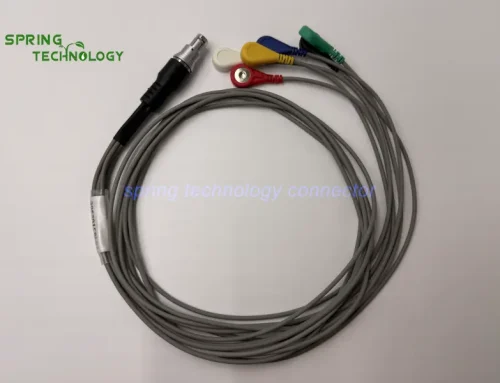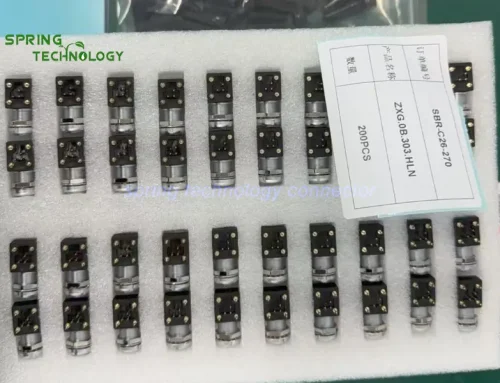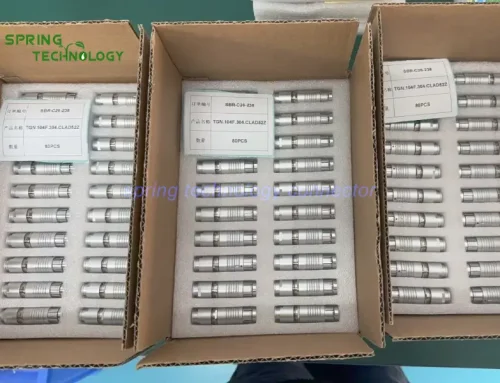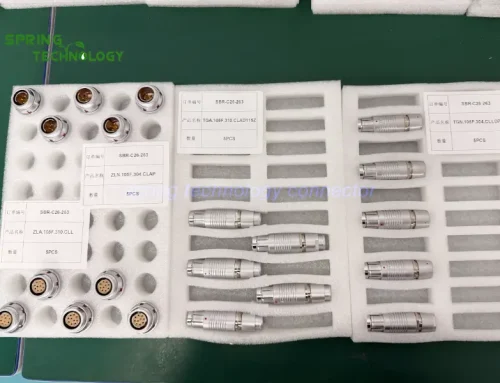


Spring Technology High-Reliability Push-Pull Connectors for Electrical Communications Systems
Push-pull connectors for electrical communications are designed to deliver secure locking, stable signal transmission, and rapid installation in modern communication infrastructures. From telecom equipment and data networks to broadcast systems and industrial communication platforms, these connectors ensure high-performance connectivity.
SPRING TECHNOLOGY AR 10 contact plug RAK13XA-KMSM10-M72 is a customerized connector solution for extreme environments. It cross reference K11YAR-P10SDD0-R000. It is waterproof when mated and unmated.This plug is designed for a harsh environments including: sand and dust,extreme temperatures, humidity, corrosion etc. It can ensure reliable electrical communications.
1. What Are Push-Pull Connectors for Electrical Communications?
Push-pull connectors are self-locking circular or modular connectors that engage when pushed together and release only when intentionally pulled. In electrical communication systems, they are widely used to transmit:
- Analog and digital signals
- High-speed data
- Power for communication modules
- RF signals (in specialized configurations)
- Fiber-optic signals (in hybrid versions)
Their secure latching mechanism ensures uninterrupted connectivity in environments where vibration, movement, or frequent maintenance are common.
2. Why Push-Pull Connectors Are Ideal for Communication Systems
2.1 Secure Self-Locking Mechanism
Communication networks require stable and continuous connections. Push-pull connectors prevent accidental disconnection caused by cable tension, vibration, or human error, maintaining network reliability.
2.2 High-Speed Data Transmission Capability
Modern electrical communication systems support Ethernet, industrial fieldbus, and other high-speed protocols. Push-pull connectors are engineered with:
- Controlled impedance
- Low contact resistance
- Effective shielding
- Minimal signal attenuation
This ensures reliable data transfer in bandwidth-intensive environments.
2.3 Electromagnetic Interference (EMI) Protection
Electrical communication equipment often operates in high-noise environments. Shielded push-pull connectors reduce EMI and RFI, preserving signal integrity and reducing transmission errors.
2.4 Quick Installation and Maintenance
Unlike threaded connectors, push-pull connectors allow:
- One-step insertion
- Tool-free disconnection
- Faster system upgrades
- Reduced downtime during servicing
This is especially valuable in telecom racks, broadcast equipment, and data cabinets.
2.5 Compact and Modular Design
Communication devices are increasingly compact. Push-pull connectors offer:
- Small footprints
- High-density pin configurations
- Hybrid layouts (power + signal + fiber)
- Customizable housings
These features support modern miniaturized communication hardware.
3. Applications of Push-Pull Connectors in Electrical Communications
Telecommunication Infrastructure
Used in signal distribution panels, network switches, routers, and transmission modules.
Data Centers
Ideal for high-density rack systems requiring secure and quickly serviceable connections.
Broadcast and Audio-Visual Systems
Ensures stable signal flow for audio, video, and control systems in studios and event installations.
Industrial Communication Networks
Supports field communication systems, PLC networks, and industrial Ethernet platforms.
Military and Secure Communication Systems
Provides vibration-resistant, shielded connections for tactical communication equipment.
Medical Communication Equipment
Used in diagnostic systems and monitoring networks requiring stable signal integrity.
4. Key Considerations When Selecting Push-Pull Connectors for Electrical Communications
4.1 Data Rate Requirements
Select connectors compatible with the communication protocol—such as Ethernet, USB, serial communication, or proprietary high-speed interfaces.
4.2 Shielding Performance
Ensure proper EMI/RFI protection for environments with heavy electrical noise.
4.3 Environmental Protection (IP Rating)
Outdoor or industrial applications may require IP65–IP68 protection.
4.4 Mechanical Durability
Look for connectors rated for high mating cycles and vibration resistance.
4.5 Contact Configuration
Choose appropriate pin counts, hybrid layouts, or fiber-optic integration depending on system needs.
4.6 Customization and Cable Assemblies
Custom overmolded cable assemblies improve strain relief and enhance long-term reliability.
5. How Push-Pull Connectors Improve Communication System Reliability
In communication networks, downtime and signal interruption can cause operational losses. Push-pull connectors contribute to system stability by:
- Preventing accidental disconnection
- Maintaining consistent signal integrity
- Reducing installation errors
- Supporting fast maintenance cycles
- Improving long-term durability
Their combination of secure locking, shielding performance, and compact design makes them a preferred solution for modern communication equipment manufacturers.
Conclusion
Spring Technology Push-pull connectors for electrical communications provide secure, high-speed, and interference-resistant connectivity across telecom, broadcast, industrial, and data networking environments. Their self-locking design, quick installation capability, and strong signal integrity make them an ideal solution for mission-critical communication systems. By selecting the right connector based on electrical performance, shielding requirements, and environmental conditions, organizations can enhance reliability and optimize long-term network performance.
FAQ
1. Why are push-pull connectors used in electrical communication systems?
They offer secure locking, stable signal transmission, and quick installation—essential for maintaining reliable network connections.
2. Can push-pull connectors support high-speed Ethernet communication?
Yes. Many push-pull connector designs are engineered for high-speed data transmission with proper shielding and impedance control.
3. Are these connectors suitable for outdoor communication equipment?
Yes. IP-rated versions provide protection against dust, moisture, and harsh environmental conditions.
4. Do push-pull connectors reduce signal interference?
Shielded models minimize EMI and RFI, improving signal quality and reducing data errors.
5. Can push-pull connectors integrate power and signal contacts?
Yes. Hybrid configurations combining power, signal, and even fiber-optic contacts are available for complex communication systems.
X Series Connector straight push-pull connectors have high-speed needle contact for transmit common data transmission protocols,It is used in high-density installations, relatively narrow spaces, and where it is difficult to insert and separate by rotation. Widely used in the military and civilian fields of radio equipment, infantry equipment, reinforced computers, medical equipment, testing equipment, audio and video equipment, data acquisition, industrial control and other occasions for AC and DC, high-speed, radio frequency, optical fiber and other signal connection transmission. Making it an ideal choice for Medical, Test & Measurement, Research, Communications, Broadcast Connector, Machines, Defense, Robotic, Aerospace, public sector, Information Systems, Motorsport, Miscellaneous applications.
- High-Speed Capabilities: Supports direct transmission of high-speed signals for various standard protocols (USB2.0, USB3.0, Gigabit Ethernet, 10 Gigabit Ethernet, HDMI, SATA, DP, etc.).
- Single Connector: Integrates the transmission of multiple signals including low-frequency, power, high-speed, RF, and optical fiber through a single connector.
- Straight Push-Pull Locking Structure for Plugs and Sockets: Enables blind mating and allows for quick connections and disconnections.
- Nut-Fastened Socket Installation: Equipped with a conductive O-ring, providing shielding and sealing functions.
- Multi-Key Positioning: dual error-prevention methods with aliginment key structure error-proofing and visual color cues to prevent incorrect insertion.
- Socket Leakage Rate: With a pressure differential of 1×10^5 Pa, the leakage rate should be less than 1.0 Pa·cm³/s (excluding optical fiber and RF products).
- Water Pressure Resistance: After mating, the plug and socket can withstand water pressure at a depth of 2 meters for 24 hours (excluding optical fiber and RF products).
- Pin and Socket Compatibility: Both plugs and sockets can be fitted with either pins or sockets (excluding optical fiber and RF products).
- High-Speed and Low-Frequency Electrical Contacts Termination: Plugs use wire soldering, and sockets are available in wire soldering and straight PCB soldering types.
Xi’an spring technology Co., Ltd. is a professional push pull connector manufacturer integrating connector research and development, production and sales. Contact me for more info and best price.
Visit our website: https://www.spring-connectors.com/