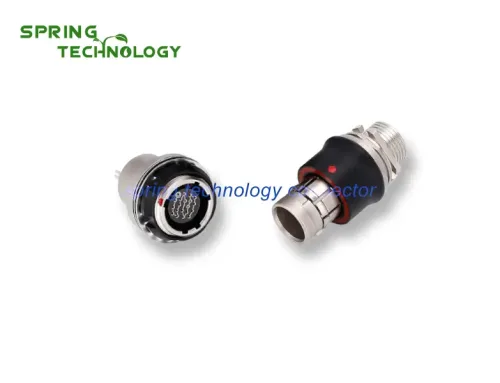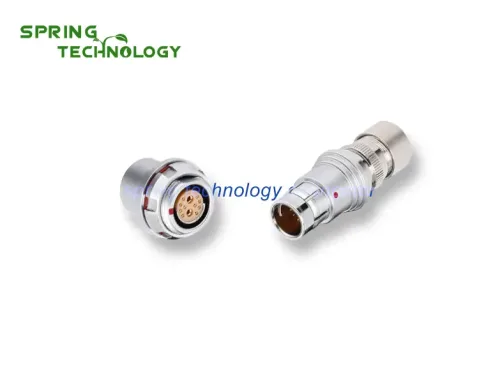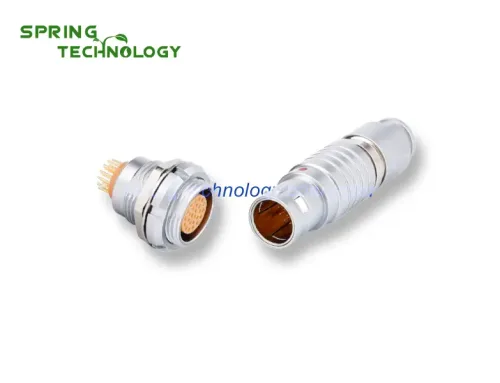


Aviation plug products represent the highest tier of electrical connector technology, designed for extreme reliability in aerospace, defense, and critical industrial applications. The insertion force is a crucial mechanical property—the maximum insertion force and minimum separation force are specified in relevant standards. From a usability perspective, insertion force should be minimal, while separation force must be sufficient to ensure contact reliability. The ability to withstand rated test voltage between contacts and the housing represents the core technology of aviation connectors.
According to 2025 industry data, the global aviation connector market is valued at $3.8 billion, with aerospace and defense applications accounting for over 65% of demand. These high-performance circular connectors must maintain low and stable contact resistance (typically a few milliohms to tens of milliohms) under extreme environmental conditions including vibration, shock, temperature extremes, and altitude.

Key Mechanical Properties of Aviation Plug Products
Insertion Force and Separation Force
The blocking force of aviation plug products divides into insertion force and tensile (separation) force, with different requirements for each. Industry standards specify:
- Maximum Insertion Force: Ensures easy mating without excessive operator effort (typically 10-50N depending on contact count)
- Minimum Separation Force: Prevents accidental disconnection under vibration and shock (typically 5-30N minimum)
If separation force is too low, contact reliability suffers. Conversely, excessive insertion force causes operator fatigue and potential damage during frequent mating cycles.
Mechanical Durability
Aviation connectors must withstand extreme mechanical stress throughout their service life:
- Vibration Resistance: Performance maintained under 10-3,000 Hz frequencies at accelerations up to 60G (per MIL-STD-202, IEC 60068-2-6)
- Shock Resistance: Withstands mechanical shock up to 100G for 6ms half-sine pulses
- Mating Cycle Life: 5,000-10,000+ cycles without performance degradation
- Cable Retention: Minimum 100 lbs pull-out strength for power contacts
Electrical Performance Standards
Contact Resistance
High-quality aviation plug products feature low and stable contact resistance ranging from a few milliohms to tens of milliohms. Key specifications include:
- Initial Contact Resistance: Typically under 50 mΩ per contact pair
- Resistance Variation: Less than 10 mΩ change after environmental testing
- Current Rating: Up to 50A per contact for power variants
Dielectric Withstanding Voltage
Electrical strength, or voltage resistance (insulation withstand voltage), represents the ability to withstand rated test voltage between connector contacts or between contact and housing. Standards require:
- Test Voltage: 1,000-5,000 VAC depending on application class
- Leakage Current: Under 1 mA during testing
- No Breakdown: No dielectric breakdown or flashover during test duration
Insulation Resistance
Insulation resistance measures the resistance between contacts and between contacts and shell:
- Standard Requirement: Over 5,000 MΩ at 500 VDC
- High-Altitude Performance: Maintained under reduced atmospheric pressure
Material Science and Surface Treatment
Anti-Oxidation Treatment
The surface treatment layer of metal structure parts and contact parts in aviation plug products undergoes special anti-oxidation treatment to:
- Resist electrochemical corrosion in harsh environments
- Maintain physical and electrical properties throughout connector lifecycle
- Prevent fretting corrosion under vibration conditions
- Ensure consistent contact resistance over thousands of mating cycles
Contact Plating Options
- Gold Plating: Premium choice for low contact resistance and corrosion resistance (0.5-2.5 μm thickness for aviation applications)
- Nickel Plating: Hard barrier layer providing wear resistance and diffusion barrier
- Silver Plating: Highest conductivity for high-current applications (requires protective overplating)
Housing Materials
- Aluminum Alloy: Lightweight, excellent strength-to-weight ratio (common in aerospace)
- Stainless Steel: Maximum corrosion resistance and mechanical strength
- Composite Materials: Emerging option for weight reduction in civilian aviation
Environmental Protection Features
Sealing and IP Ratings
Aviation plug products require superior environmental sealing:
- IP67: Temporary immersion protection (30 minutes at 1 meter depth)
- IP68: Continuous submersion resistance
- IP69K: High-pressure, high-temperature washdown capability
- Hermetic Sealing: Glass-to-metal or ceramic-to-metal seals for pressure vessel applications
Temperature Range
Operating temperature ranges for aviation connectors far exceed commercial standards:
- Standard Range: -55°C to +125°C
- Extended Range: -65°C to +175°C (engine compartment applications)
- High-Temperature: Up to +200°C (specialized applications)
Altitude and Pressure
High-altitude performance presents unique challenges:
- Low Pressure: Operation at altitudes up to 70,000 feet (21 km)
- Outgassing: Materials selected to minimize gas release in vacuum
- Corona Resistance: Prevents electrical discharge at reduced atmospheric pressure
- Dielectric Strength: Maintained under thin air conditions
Industry Applications
Commercial Aerospace
Civilian aircraft utilize aviation plug products throughout airframe systems:
- Flight control systems and avionics
- Engine monitoring and control
- Cabin environmental systems
- In-flight entertainment and connectivity
- Landing gear and hydraulic systems
Military and Defense
Military specifications (MIL-DTL-38999, MIL-DTL-5015) mandate extreme reliability:
- Weapons systems and guidance
- Radar and communications equipment
- Electronic warfare systems
- Unmanned aerial vehicles (UAVs)
- Ground support equipment
Space and Satellite
Space-grade connectors face the harshest conditions:
- Vacuum compatibility (outgassing per ASTM E595)
- Radiation resistance
- Thermal cycling (-150°C to +120°C in orbit)
- Launch vibration and shock
High-Reliability Industrial
Critical industrial applications adopt aviation-grade standards:
- Oil and gas exploration (offshore platforms)
- Medical imaging and surgical equipment
- Railway and mass transit systems
- Power generation and distribution
2026 Aviation Connector Trends
The aviation plug industry continues evolving with several key developments:
- Weight Reduction: Composite housings and miniaturized contacts reduce connector weight by 30-40% (critical for fuel efficiency)
- High-Speed Data: Support for Ethernet 10GbE, USB 3.2, and fiber optic channels in ruggedized aviation packages
- Hybrid Configurations: Combined power, signal, data, and fluid contacts in single connector housing
- Smart Connectors: Integrated sensors for connection monitoring, temperature sensing, and predictive maintenance
- Sustainable Materials: Recyclable alloys and RoHS-compliant plating without performance compromise
- Modular Designs: Field-configurable contact arrangements reducing inventory complexity for MRO operations
Selection Criteria for Aviation Plug Products
Application Requirements
- Operating environment (temperature, humidity, altitude, chemicals)
- Electrical requirements (voltage, current, signal type, shielding)
- Mechanical constraints (size, weight, mating cycles, vibration)
- Regulatory compliance (FAA, EASA, MIL-SPEC, industry standards)
Quality and Certification
- AS9100: Aerospace quality management system certification
- MIL-SPEC: Military specification compliance (MIL-DTL-38999, etc.)
- Traceability: Full material and process traceability for critical applications
- Testing: Comprehensive environmental and electrical testing per applicable standards
Conclusion
Aviation plug products represent the pinnacle of electrical connector technology, engineered for maximum reliability under the most demanding conditions. The combination of precise mechanical properties (insertion/separation force), superior electrical performance (low contact resistance, high dielectric strength), advanced materials (anti-oxidation treatments, premium plating), and comprehensive environmental protection (sealing, temperature range, altitude performance) ensures these connectors perform flawlessly throughout their service life.
When selecting aviation connectors for your application, consider factors including operating environment, electrical specifications, mechanical requirements, regulatory compliance, quality certifications, and total cost of ownership. Proper connector specification ensures reliable electrical connections in critical aerospace, defense, and high-reliability industrial applications while minimizing field failures and maintenance costs.
As aviation technology advances toward more electric aircraft, unmanned systems, and space commercialization, aviation plug products will continue evolving to meet emerging challenges. Understanding fundamental features and selection criteria enables engineers to make informed decisions for their specific high-reliability interconnection requirements.
Frequently Asked Questions (FAQ)
Q1: What is the difference between aviation plugs and standard circular connectors?
A: Aviation plug products meet more stringent requirements for environmental resistance, mechanical durability, and electrical performance. They typically comply with military or aerospace specifications (MIL-DTL-38999, NAS, EN series), operate in wider temperature ranges (-55°C to +200°C), and undergo more rigorous testing than commercial-grade circular connectors.
Q2: How important is contact plating for aviation connectors?
A: Contact plating is critical for aviation applications. Gold plating (0.5-2.5 μm) provides lowest contact resistance and best corrosion resistance for signal contacts. Nickel plating serves as excellent barrier layer and wear surface. Proper plating selection ensures reliable electrical performance over thousands of mating cycles in harsh environments.
Q3: What IP rating is required for aviation applications?
A: Most aviation applications require minimum IP67 rating for water and dust resistance. External fuselage connections may require IP68 or IP69K. Pressurized cabin applications have less stringent sealing requirements but must maintain performance under rapid pressure changes during altitude transitions.
Q4: How do aviation connectors handle high-altitude conditions?
A: Aviation connectors address high-altitude challenges through material selection (low outgassing), design features (preventing corona discharge), and testing validation. Connectors must maintain dielectric strength and insulation resistance at altitudes up to 70,000 feet where reduced atmospheric pressure increases electrical breakdown risk.
Q5: What certifications should I look for in aviation connector suppliers?
A: Key certifications include AS9100 (aerospace quality management), NADCAP (special process accreditation), and compliance with applicable military or industry specifications (MIL-DTL-38999, EN3645, etc.). Full material traceability and comprehensive testing documentation are essential for critical aviation applications.
Extended Reading
- What Is Push-Pull Circular Connector? – Understanding self-latching connector technology for rapid-connect applications
- How to Choose an Electronic Connector – Comprehensive connector selection guide covering all critical factors
- Defense and Military Connectors – Military-specification connector solutions for defense applications