

Internet of Things IoT 2026: Complete Guide to IoT Connectivity & Sensor Solutions
Meta Description: Comprehensive guide to Internet of Things (IoT) in 2026. Explore IoT connectivity solutions, sensor technologies, smart device applications, and industrial IoT trends shaping the future of connected ecosystems.
Introduction to Internet of Things Technology
The Internet of Things (IoT) has transformed from a futuristic concept into a pervasive reality connecting billions of devices worldwide. IoT refers to a network of physical objects embedded with sensors, software, and connectivity that enables data exchange and intelligent decision-making without human intervention.
In 2026, the global IoT market continues exponential growth, driven by 5G network expansion, edge computing advancement, and AI integration. Understanding IoT connectivity solutions and sensor technologies is essential for businesses leveraging connected ecosystems for competitive advantage.
Core Components of IoT Systems
Sensors and Actuators
Sensors form the foundation of IoT ecosystems, collecting real-world data:
- Environmental Sensors: Temperature, humidity, air quality, pressure monitoring
- Motion Sensors: Accelerometers, gyroscopes, proximity detection
- Optical Sensors: Cameras, light sensors, infrared detectors
- Biometric Sensors: Heart rate, blood pressure, fingerprint recognition
Connectivity Protocols
IoT devices communicate through various wireless and wired protocols:
- Short-Range: Bluetooth 5.x, Zigbee, Z-Wave, WiFi 6/6E
- LPWAN: LoRaWAN, NB-IoT, Sigfox for low-power wide-area networks
- Cellular: 4G LTE-M, 5G NR for high-bandwidth applications
- Wired: Ethernet, RS-485, CAN bus for industrial environments
Edge Computing and Gateways
Edge devices process data locally before cloud transmission:
- Reduces latency for real-time applications
- Minimizes bandwidth costs and cloud storage requirements
- Enables offline operation during network interruptions
- Enhances data privacy through local processing
Cloud Platforms and Analytics
IoT cloud platforms provide centralized management and insights:
- Device provisioning, monitoring, and firmware updates
- Data aggregation, storage, and visualization dashboards
- Machine learning models for predictive analytics
- Integration with enterprise systems (ERP, CRM, SCM)
2026 IoT Market Trends and Data
Market Growth Projections
The global IoT market is experiencing unprecedented expansion:
- Market Size: Projected to reach USD 1.8 trillion by 2028, growing at 25.4% CAGR
- Connected Devices: 41 billion IoT devices deployed worldwide by 2026 (IoT Analytics)
- Enterprise Adoption: 85% of enterprises have active IoT initiatives
- IoT Spending: Hardware (45%), Software (30%), Services (25%)
Industry Application Trends
Leading IoT adoption sectors in 2026 include:
- Industrial IoT (IIoT): Predictive maintenance, digital twins, smart manufacturing
- Smart Cities: Traffic management, waste optimization, environmental monitoring
- Healthcare: Remote patient monitoring, connected medical devices, telemedicine
- Agriculture: Precision farming, livestock tracking, automated irrigation
- Smart Home: Security systems, energy management, voice-controlled appliances
Technology Evolution
2026 IoT innovations driving market growth:
- 5G standalone networks enabling ultra-reliable low-latency communications (URLLC)
- AI-powered edge devices with on-device machine learning inference
- Matter protocol standardizing smart home device interoperability
- Quantum-resistant encryption for IoT security enhancement
- Energy harvesting technologies extending battery-free sensor operation
IoT Connector Requirements and Challenges
Miniaturization Demands
IoT devices require compact, reliable connectors:
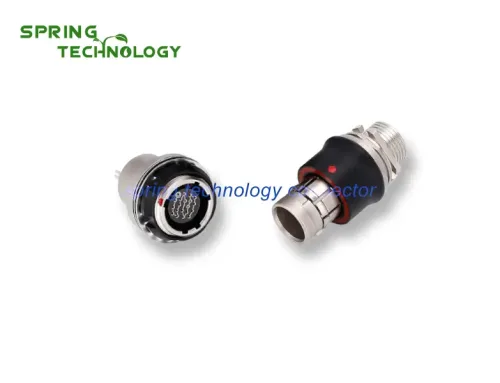
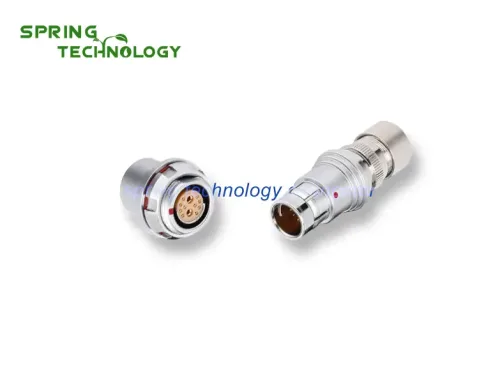
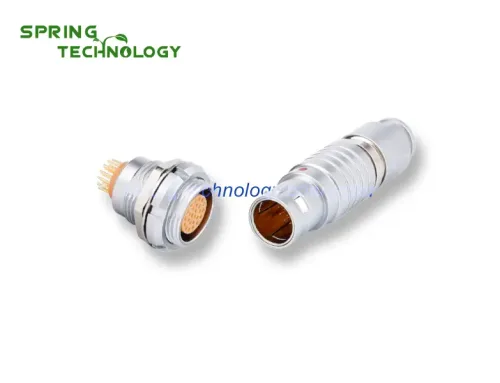
- Micro circular connectors (8-16mm shell size) for space-constrained designs
- High-density pin configurations supporting power + signal in single interface
- Push-pull self-locking mechanisms for quick field installation
- Lightweight materials (aluminum alloy, reinforced polymers) reducing device mass
Environmental Protection
IoT sensors operate in diverse conditions requiring robust protection:
- IP67/IP68 Ratings: Waterproof, dust-tight enclosures for outdoor deployment
- Temperature Range: -40°C to +85°C operation for industrial applications
- Chemical Resistance: Corrosion-resistant materials for harsh environments
- UV Stability: Sunlight-resistant housings for agricultural and smart city sensors
Power Efficiency
Low-power design extends battery life for remote IoT devices:
- Connectors with low contact resistance minimizing power loss
- Energy harvesting integration (solar, vibration, thermal gradients)
- Sleep mode compatibility with microampere current leakage
- Power-over-Ethernet (PoE) support for wired IoT installations
Signal Integrity
Reliable data transmission requires optimized connector design:
- 360° EMI/RFI shielding preventing electromagnetic interference
- Impedance matching for high-frequency sensor signals
- Gold-plated contacts ensuring stable low-voltage signal transmission
- Twisted-pair and coaxial cable compatibility for noise immunity
Smart City IoT Applications
Intelligent Traffic Management
IoT sensors optimize urban transportation:
- Real-time traffic flow monitoring and adaptive signal control
- Parking space detection reducing congestion from circling vehicles
- Public transit tracking improving schedule accuracy
- Emergency vehicle priority systems saving critical response time
Environmental Monitoring
City-wide sensor networks track air and water quality:
- PM2.5, PM10, NO2, O3, CO air pollutant measurement
- Noise pollution mapping for urban planning
- Water quality sensors detecting contamination events
- Flood detection systems providing early warnings
Smart Waste Management
IoT-enabled waste bins optimize collection routes:
- Fill-level sensors triggering collection only when needed
- Solar-powered compactors increasing bin capacity 5-8×
- Route optimization reducing fuel consumption and emissions
- Recycling contamination detection improving waste sorting
Industrial IoT (IIoT) Solutions
Predictive Maintenance
IIoT sensors prevent equipment failures before they occur:
- Vibration analysis detecting bearing wear and misalignment
- Thermal imaging identifying electrical hot spots
- Oil quality monitoring for lubrication optimization
- Acoustic emission sensors catching early-stage faults
Digital Twin Technology
Virtual replicas of physical assets enable simulation and optimization:
- Real-time synchronization between physical and digital models
- What-if scenario testing without production disruption
- Performance optimization through continuous data analysis
- Remote expert support reducing on-site service visits
Supply Chain Visibility
IoT tracking provides end-to-end logistics transparency:
- GPS and cellular trackers monitoring shipment location
- Temperature and humidity sensors for cold chain integrity
- Shock and tilt detection preventing damage during transit
- Automated inventory management with RFID and barcode scanning
Healthcare IoT Applications
Remote Patient Monitoring
Wearable and home-based IoT devices enable continuous care:
- Vital signs monitoring (heart rate, blood pressure, SpO2)
- Glucose monitoring for diabetes management
- ECG patches detecting arrhythmias and cardiac events
- Medication adherence tracking with smart pill dispensers
Connected Medical Devices
Hospital IoT integration improves patient outcomes:
- Infusion pumps with wireless medication verification
- Ventilators transmitting real-time respiratory data
- Patient beds monitoring movement and fall risk
- Asset tracking locating critical equipment instantly
IoT Security Considerations
Device Authentication
Strong authentication prevents unauthorized device access:
- Certificate-based authentication (X.509 certificates)
- Hardware security modules (HSM) for key storage
- Multi-factor authentication for device provisioning
- Secure boot ensuring firmware integrity
Data Encryption
End-to-end encryption protects sensitive IoT data:
- TLS 1.3 for secure communication channels
- AES-256 encryption for data at rest
- Perfect forward secrecy preventing retrospective decryption
- Regular key rotation minimizing compromise impact
Firmware Updates
Secure over-the-air (OTA) updates patch vulnerabilities:
- Signed firmware images preventing malicious modifications
- Rollback protection blocking downgrade attacks
- Staged rollouts detecting issues before full deployment
- Fallback mechanisms ensuring device recovery from failed updates
Conclusion
The Internet of Things has evolved from emerging technology to critical infrastructure powering smart cities, industrial automation, healthcare innovation, and connected consumer experiences. As we advance through 2026, IoT continues to expand with 5G connectivity, edge AI, and enhanced security protocols enabling new applications across every industry sector.
Selecting the right IoT connectivity solutions, sensors, and connectors—considering power efficiency, environmental protection, signal integrity, and security—ensures reliable deployment and long-term operational success. The future of IoT is here, connecting our world in ways previously unimaginable.
FAQ: Internet of Things (IoT)
What is the Internet of Things (IoT)?
IoT refers to a network of physical devices embedded with sensors, software, and connectivity that enables them to collect and exchange data over the internet without human intervention. Examples include smart thermostats, industrial sensors, wearable fitness trackers, and connected vehicles.
How many IoT devices are connected worldwide?
As of 2026, approximately 41 billion IoT devices are deployed globally, with projections reaching 50+ billion by 2028. Enterprise IoT accounts for 60% of connections, while consumer IoT represents the remaining 40%.
What are the main IoT connectivity protocols?
Common IoT protocols include WiFi 6/6E for high-bandwidth applications, Bluetooth 5.x for short-range personal devices, Zigbee/Z-Wave for smart home automation, LoRaWAN/NB-IoT for long-range low-power sensors, and 5G/LTE-M for cellular IoT deployments.
How secure are IoT devices?
IoT security varies significantly by manufacturer and application. Best practices include device authentication, end-to-end encryption, regular firmware updates, network segmentation, and security-by-design principles. Industrial and healthcare IoT typically implement stricter security than consumer devices.
What is the difference between IoT and IIoT?
IoT (Internet of Things) encompasses all connected devices including consumer applications. IIoT (Industrial IoT) focuses specifically on industrial applications like manufacturing, energy, logistics, and infrastructure—often requiring higher reliability, security, and environmental tolerance than consumer IoT.
Extended Reading
- Learn to distinguish connectors, terminals, and connectors – Understanding connector fundamentals for IoT applications
- Introduction to the basic specifications of common UL wires – Wire standards for IoT cable assemblies
- What are the common fault forms of connector terminals – Troubleshooting IoT connector issues
Xi’an Spring Technology Co., Ltd. is a professional push-pull connector manufacturer integrating connector R&D, production, and sales. We provide high-quality IoT connectors, sensor cable assemblies, and custom connectivity solutions for smart city, industrial, and healthcare applications.
Contact us: [email protected] | www.spring-connectors.com