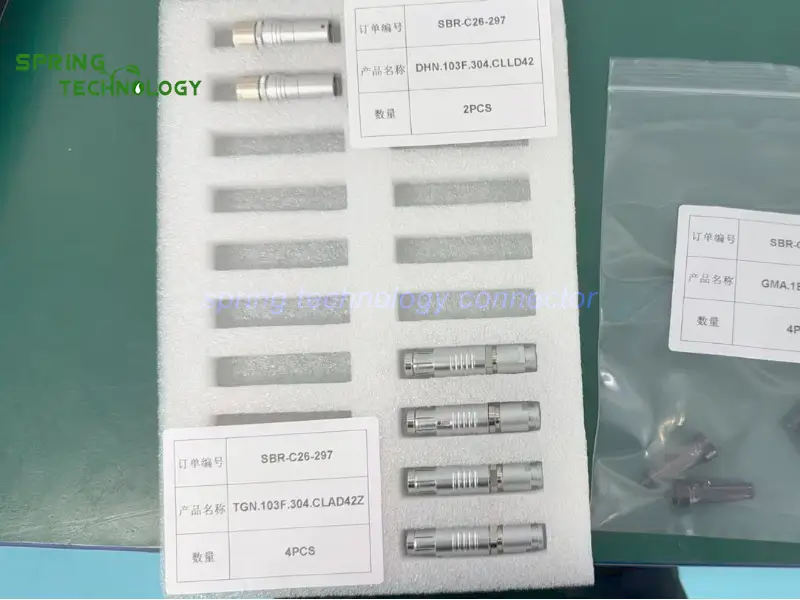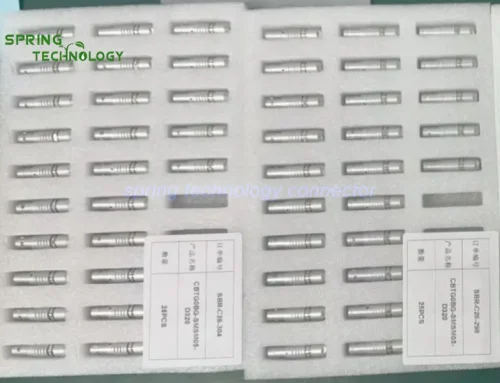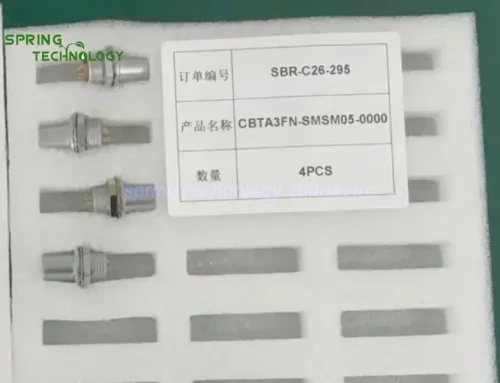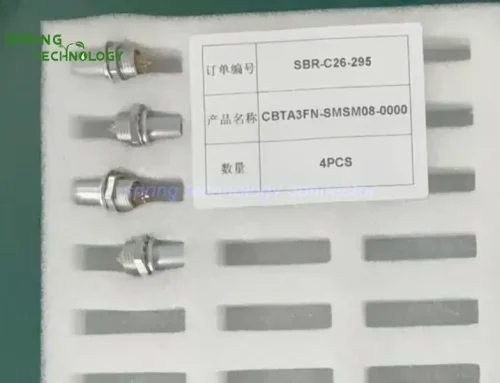


Connectors for Blade Balancing Testers 2026: CBTG3FN Plug and CBDH3FN Cable Receptacle
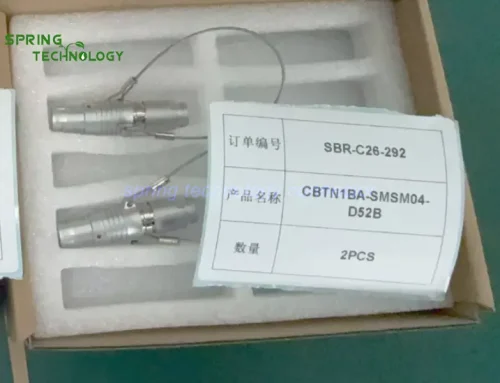
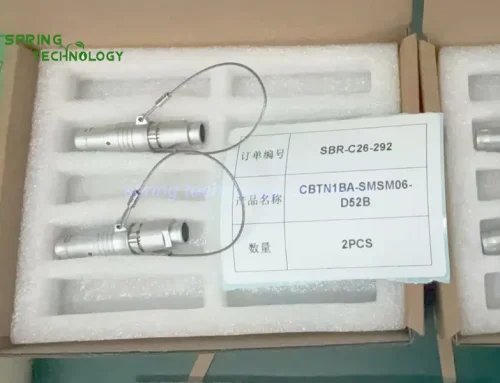
Spring Technology supplies connectors for blade balancing testers — the CBTG3FN-SMSM04-D42B is a four-contact cable-mounted straight plug in the TG body style 3F series, and the CBDH3FN-SFSM04-D420 is a four-contact cable-mounted receptacle in the DH body style 3F series. Both sit on the 103F platform with IP68 protection when mated, solder termination, a collet-style cable clamp, key N standard keying, operation from -55 °C to +145 °C, vibration resistance of 10–20,000 Hz at 147 m/s² with ≤1 µm instantaneous break, and more than 3,000 mating cycles. Every specification in this guide is backed by the rotating equipment diagnostics interconnect engineering of Spring Technology.
Pain point: Running a vibration sensor and an optical speed pickup out to a balancing instrument on a factory floor — where cables are coiled, unplugged and swapped between fans and compressors several times a day, and the join has to stay electrically stable while the machinery runs?
Core answer: Spring Technology offers this plug-and-receptacle combination for evaluation as a potential connector combination for portable blade balancing equipment, supporting organised sensor connections, convenient cable handling and efficient rotating equipment diagnostics, provided the exact mating compatibility and electrical configuration are verified. Portable blade balancing testers assess vibration and imbalance in rotating components including industrial fan impellers, compressor rotors and selected turbine-related components — helping maintenance teams identify imbalance-related vibration in support of equipment troubleshooting, preventive maintenance and rotating machinery reliability programs. During balancing measurements the instrument may connect to vibration sensors, optical speed pickups and other measurement accessories, and a dependable connector interface helps technicians manage these cables while moving between machines and inspection locations.
1. Technical Parameters & Engineering Standards
Both parts are built on the 103F platform: the TG body style cable plug and the DH body style cable receptacle.
- Latching Mechanism: Quick-release push-pull locking system (connect and release without a threaded-coupling operation)
- Recommended Hardware: Spring Technology Circular Connector and custom cable assembly service
- Key Metric: 4 contacts each; both cable-mounted; IP68 (mated, 103F platform); >3,000 mating cycles
1.1 Plug and Receptacle in this Pairing
| Feature | CBTG3FN-SMSM04-D42B | CBDH3FN-SFSM04-D420 |
|---|---|---|
| Body style | TG body style 3F series cable-mounted straight plug | DH body style 3F series cable-mounted receptacle |
| Contacts | 4 contacts | 4 contacts |
| Termination | Solder | Solder |
| Cable interface | Collet-style cable clamp | Collet-style cable clamp |
| Protection (mated) | IP68 (103F platform) | IP68 (103F platform) |
| Mating cycles | >3,000 cycles | >3,000 cycles |
| Keying | Key N standard | Key N standard |
| Locking | Quick-release push-pull | Quick-release push-pull |
1.2 Shared 103F Platform Specifications
| Parameter | Value |
|---|---|
| Series | 103F platform — sealed circular connector |
| Protection | IP68 (mated) |
| Pin counts available | 2–16 pins across 103F bodies, including the four-contact layout used here |
| Operating temperature | -55 °C ~ +145 °C |
| Vibration resistance | 10–20,000 Hz, acceleration 147 m/s², ≤1 µm instantaneous break |
| Mating cycles | >3,000 cycles |
| Termination | Solder |
| Keying | Key N standard; alternative keys available to determine keying |
Note: the four-contact count confirms capacity, not function — the actual contact allocation must be determined by the equipment manufacturer, and the connector’s pin count alone does not define which sensors it can support.
2. Why Consider TG and DH Body Style 3F Series Connectors?
Balancing work is portable and repetitive. The design advantages below explain why these connectors for blade balancing testers suit rotating equipment diagnostics:
2.1 Four Contacts for Organized Sensor Connections
- A four-contact connector consolidates several electrical circuits within a single interface and, depending on the balancing tester’s design, these circuits may be used for sensor signals, auxiliary connections or other low-voltage functions. A balancing system may use a vibration sensor alongside a rotational speed pickup, and a suitable four-contact connection helps organise the required wiring when the electrical architecture and pin assignment are compatible.
2.2 Quick Connection and Disconnection
- The TG body style 3F series is a cable-mounted straight plug while the DH body style 3F series is a cable-mounted receptacle designed for a compatible connector interface. The published plug documentation identifies a quick-release locking system, which is useful when technicians frequently connect and disconnect instrument cables during maintenance work — and for balancing tests performed at different machines or workstations, a suitable quick-release connection simplifies cable handling and helps reduce setup interruptions.
2.3 Flexible Cable Assembly Design
- Both connector styles are available in the 103F connector range. A compatible plug-and-receptacle combination provides a detachable connection between cable sections or between an instrument cable and a sensor assembly, making damaged cables easier to replace without redesigning the entire measurement system. Equipment designers should confirm cable diameter, termination method, connector keying and exact mating part numbers before building the assembly.
2.4 Support for Reliable Vibration Measurement Workflows
- Blade balancing depends on obtaining consistent vibration and rotational speed measurements under the intended test conditions, and a correctly selected connector helps maintain the electrical connection between the sensor cable and measurement system during routine testing — particularly useful when technicians reposition sensors, inspect different rotating components or repeat measurements during balancing adjustments. However, connector selection alone cannot guarantee measurement accuracy, since sensor mounting, calibration, rotational speed measurement, signal conditioning and the balancing procedure also affect results.
2.5 Practical for Portable Maintenance Equipment
- Portable balancing instruments are frequently transported between workshops, production areas and equipment maintenance locations, and their cables may be repeatedly coiled, connected, disconnected and replaced. A dedicated connector interface helps organise cable assemblies and simplify routine servicing, with appropriate cable strain relief and protection against mechanical damage considered when designing the complete assembly. The environmental suitability of the connection must be checked against the operating conditions — the exact TG and DH body style 3F series combination should not be assumed waterproof or suitable for heavy contamination without confirming the relevant specifications.
3. Typical Applications in Rotating Equipment Diagnostics
The proposed application of these connectors for blade balancing testers may be evaluated in portable instruments used in:
- Industrial fan maintenance: connecting compatible vibration sensors and measurement cables when checking fan impeller imbalance.
- Compressor rotor diagnostics: supporting sensor connections during vibration assessment and balancing-related maintenance.
- Industrial blower servicing: providing a detachable cable interface for portable instruments used to evaluate rotating equipment.
- Rotating component quality control: supporting electrical connections in balancing equipment used during manufacturing or post-maintenance inspection.
These are potential equipment-design applications — not claims that this exact TG body style 3F series and CBDH3FN-SFSM04-D420 combination has been confirmed in a particular commercial balancing tester.
4. 103F Series Connector Family Overview
The 103F platform belongs to Spring Technology’s sealed push-pull connector family for industrial maintenance equipment. The same platform serves these connectors for blade balancing testers and scales across plug, cable-receptacle and panel bodies.
4.1 Available Configurations
- Cable plugs: TGN.103F and TLN.103F straight plugs, plus TWN.103F elbow plugs.
- Cable receptacles: DHN.103F free sockets with a collet-style cable clamp.
- Panel bodies: ZLN.103F hermetic panel sockets and TA body style 3F panel-mounted plugs.
- Pin counts: 2–16 contacts across 103F bodies, with key N standard.
4.2 Customization Services
- Custom contact allocations and part numbers (such as the CBTG3FN-SMSM04-D42B and CBDH3FN-SFSM04-D420) matched to each instrument’s wiring plan.
- Sensor and speed-pickup cable assemblies with defined cable openings, strain relief and collet clamping.
- Shielding and grounding support for vibration signal and tachometer circuits.
- Mating part selection support, including keying and contact-layout confirmation.
5. Frequently Asked Questions (FAQ)
Conclusion & Call to Action
The CBTG3FN-SMSM04-D42B plug and CBDH3FN-SFSM04-D420 cable receptacle can be evaluated for portable blade balancing testers that require an organised, detachable electrical interface — with potential benefits in convenient cable handling, flexible assembly design and easier maintenance when the connectors are correctly matched to the instrument. This delivery shows how Spring Technology serves rotating equipment diagnostics, aligning a four-contact TG plug and DH cable receptacle on the sealed 103F platform with the customer’s balancing tester requirements, and the company also provides professional customization services for both push-pull connectors and cable assemblies, offering tailored solutions to meet your specific technical requirements.
Before production, manufacturers should confirm the complete ordering codes, mating compatibility, contact assignment, termination method, cable dimensions, electrical ratings and environmental requirements — these checks help ensure the connection is suitable for the intended vibration and balancing measurement system.
For more information about our 103F series connectors or to discuss your requirements, contact us at [email protected] or [email protected], or visit our website. Our engineering team will respond to your connectors for blade balancing testers enquiry within 24 hours.
Further Reading
- CBTG31FA Push-Pull Connector for Vibration Testing 2026: 31F Series 10-Pin Connector for Portable Data Acquisition Instruments for German Client
- BBZX0BG Push-Pull Connector for Vibration Calibrators 2026: 0B Series 3-Contact Elbow PCB Socket for Portable Calibration Instruments
- CBTG1BG Push-Pull Connector for Battery Pack Vibration Testing 2026: 1B Series 14-Contact Plug for Sensor Signal Interfaces
- CBTG2FN Push-Pull Connector for Precision Machine Tools 2026: CBTG2FN-SMSM09-D520 and CBZL2FN-SFPM09-S000 for Multi-Channel Miniature Sensor Aggregation for Russian Client
- CBZG00BG Push-Pull Connector for Insulation Resistance Testers 2026: 00B Series 4-Contact M7 Panel Socket for Portable Test Instruments for US Client
- TGN.103F Straight Plug — Product Page
- DHN.103F Free Socket — Product Page
- 103F Series Connector