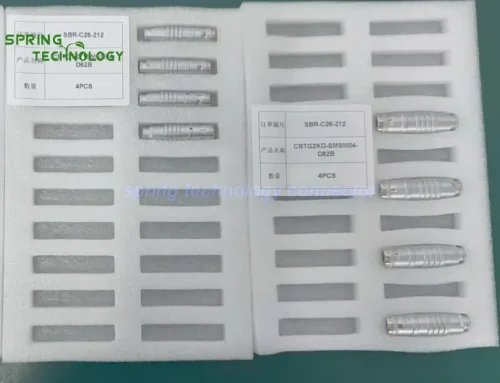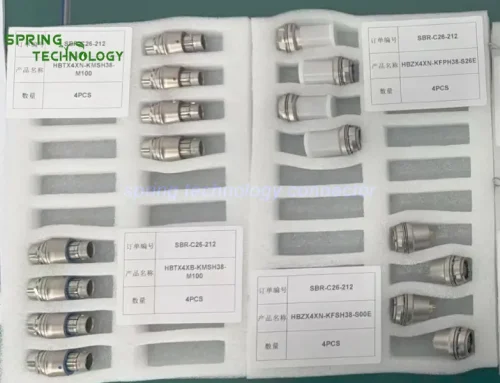


Connectors for Corrosion Potential Mapping Instruments 2026: CBTG2BG 12-Contact Plug and CBDH2BG Free Socket
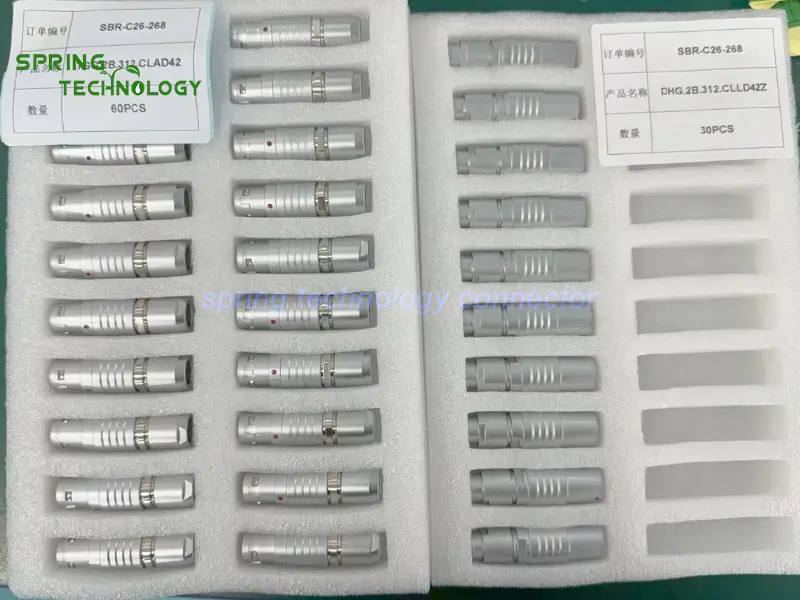
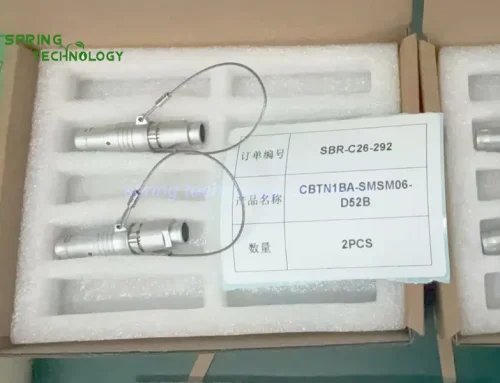
Spring Technology supplies connectors for corrosion potential mapping instruments — the CBTG2BG-SMSM12-D420 straight cable plug with twelve low-voltage contacts, solder termination and AWG 30–22 wire support, paired with the CBDH2BG-SFSM12-D42B free-socket receptacle, both on the 2B platform with IP50 protection, push-pull self-latching coupling, cable collet fixation, operation from -45 °C to +125 °C, vibration resistance of 10~20,000 Hz at 15 g and 5,000 mating cycles. Every specification in this guide is backed by the civil infrastructure inspection interconnect engineering of Spring Technology.
Pain point: Surveying a bridge deck or parking structure means moving between dozens of measurement points — where electrode signals and auxiliary circuits must stay consistent across the whole survey, probe cables are plugged and unplugged repeatedly, and an IP50 interface has to be protected from wet concrete and rain?
Core answer: Spring Technology offers this plug-and-receptacle combination for evaluation in this type of instrument connection, supporting multi-contact connectivity, secure coupling and convenient field inspection, provided the exact mating compatibility is confirmed. Reinforced concrete corrosion assessment is an important part of maintaining bridges, tunnels, parking structures and other concrete infrastructure, and portable corrosion potential mapping instruments help inspection teams collect electrical potential measurements across multiple locations on a concrete surface — with the resulting data helping engineers evaluate corrosion risk and determine where further investigation or maintenance may be needed. These instruments often connect measurement probes, electrode assemblies, extension cables and electronic acquisition units, and a reliable connector interface keeps the measurement system organised during repeated field inspections.
1. Technical Parameters & Engineering Standards
Both parts are built on the 2B platform: the TG straight cable plug body and the DHG free-socket body.
- Latching Mechanism: Push-pull self-latching system (coupled and released through a straightforward push-pull operation)
- Recommended Hardware: Spring Technology Circular Connector and custom cable assembly service
- Key Metric: 12 low-voltage contacts; IP50; AWG 30–22 wire range; 5,000 mating cycles
1.1 Plug and Receptacle in this Pairing
| Feature | CBTG2BG-SMSM12-D420 | CBDH2BG-SFSM12-D42B |
|---|---|---|
| Format | Straight cable-mounted plug | Free-socket receptacle |
| Contacts | 12 low-voltage contacts | 12 contacts (confirm arrangement) |
| Termination | Solder | Solder |
| Wire range | AWG 30–22 | Confirm per exact model |
| Cable interface | Cable collet, 1.5–9.7 mm opening (2B plug) | Cable collet |
| Protection | IP50 | IP50 (2B platform) |
| Mating cycles | 5,000 | >5,000 (2B platform) |
| Locking | Push-Pull | Push-Pull |
1.2 Shared 2B Platform Specifications
| Parameter | Value |
|---|---|
| Series | 2B shell — TG straight plug / DHG free socket |
| Protection | IP50 |
| Pin counts available | 2–26 pins across the 2B shell |
| Cable opening (plug) | 1.5–9.7 mm (2B platform), with cable collet |
| Operating temperature | -45 °C ~ +125 °C |
| Vibration resistance | 10~20000 Hz, 15 g |
| Shock resistance | 100 g · 6 ms |
| Mating cycles | >5,000 cycles |
| Keying | Key G or keys A…M and R to prevent mismating |
Note: IP50 is an indoor or otherwise protected-environment rating, not a water-ingress rating — for field inspection work the complete assembled interface must be verified for the required environmental conditions before use in rain, on wet concrete or in contaminated surroundings.
2. Why Consider Connectors for Corrosion Mapping Instruments?
Field surveys are repetitive and physical. The design advantages below explain why these connectors for corrosion potential mapping instruments suit portable acquisition equipment:
2.1 Multi-Contact Connectivity for Measurement Systems
- The CBTG2BG-SMSM12-D420 features 12 low-voltage contacts supporting multiple electrical paths within one connector interface, depending on the instrument’s wiring design, with solder termination and wire sizes from AWG 30 to AWG 22. For a corrosion mapping instrument, a multi-contact connection helps organise electrode signals, auxiliary circuits and other low-voltage connections into one cable interface. The actual contact allocation must be determined by the equipment designer.
2.2 Push-Pull Self-Latching Connection
- The CBTG2BG-SMSM12-D420 uses a push-pull locking system that couples and releases through a straightforward push-pull operation. During concrete inspections, technicians move between measurement points and reposition probe cables frequently, so a suitable push-pull interface makes routine connection and disconnection more convenient while helping prevent unintended separation during normal handling.
2.3 Compact Cable Interface
- The straight cable-mounted plug can be incorporated into a detachable cable assembly, helping equipment manufacturers create a defined connection between the measurement cable and the instrument or accessory. A structured cable interface simplifies cable replacement, inspection and maintenance — with cable diameter, strain relief, bend radius and mechanical protection confirmed before finalising the assembly.
2.4 Support for Repeatable Field Workflows
- Corrosion potential mapping depends on collecting measurements at multiple locations and keeping the probe and instrument connections consistent throughout the inspection process. A properly selected connector helps maintain a stable electrical interface during routine use — although connector selection alone cannot guarantee measurement accuracy, since electrode condition, instrument calibration, surface preparation and testing procedures also matter.
2.5 Suitable for Protected Environments
- The published specification lists an IP50 protection rating and 5,000 mating cycles for the plug, which is intended for indoor or otherwise protected environments rather than direct exposure to water or heavy dust. For field inspection equipment the connector should therefore be protected from rain, wet concrete and contamination unless the complete assembled interface has been verified for the required environmental conditions.
3. Typical Equipment Applications
The proposed connector interface may be evaluated for portable corrosion assessment equipment used in:
- Bridge deck inspections: connecting measurement cables and probe assemblies during concrete condition surveys.
- Parking structure assessments: supporting electrical connections in instruments used to investigate potential corrosion risks in reinforced concrete.
- Tunnel maintenance: organising probe and measurement connections for planned structural inspections.
- Concrete infrastructure surveys: providing a detachable cable interface for portable measurement and data acquisition equipment.
These are potential engineering applications for these connectors for corrosion potential mapping instruments — not claims that these exact part numbers have been confirmed in use in a particular commercial instrument.
4. 2B Series Connector Family Overview
The 2B shell belongs to Spring Technology’s push-pull connector family for industrial and field equipment. The same platform serves these connectors for corrosion potential mapping instruments and scales across plugs, free sockets and panel sockets.
4.1 Available Configurations
- Plugs: TGG.2B straight plugs, with or without bend relief, including the 12-contact layout used here.
- Free sockets: DHG.2B free sockets for cable-to-cable extensions, with or without bend relief.
- Panel sockets: ZGG.2B fixed panel sockets for enclosure-mounted interfaces.
- Pin counts: 2–26 contacts across the 2B shell, with key G or keys A…M and R.
4.2 Customization Services
- Custom contact allocations and part numbers (such as the CBTG2BG-SMSM12-D420 and CBDH2BG-SFSM12-D42B) matched to each instrument’s wiring plan.
- Extension cable assemblies for multi-point survey layouts, with defined cable openings and strain relief.
- Shielding and grounding support for low-level potential measurement circuits.
- Mating receptacle selection support, including keying and contact-layout confirmation.
5. Frequently Asked Questions (FAQ)
Conclusion & Call to Action
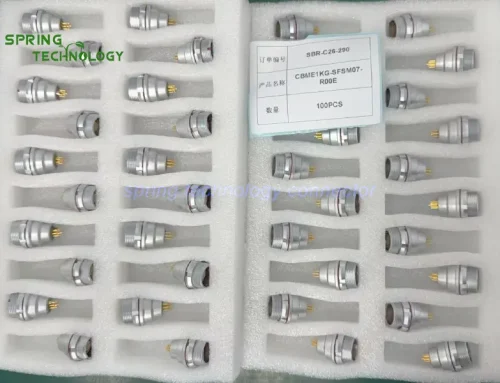
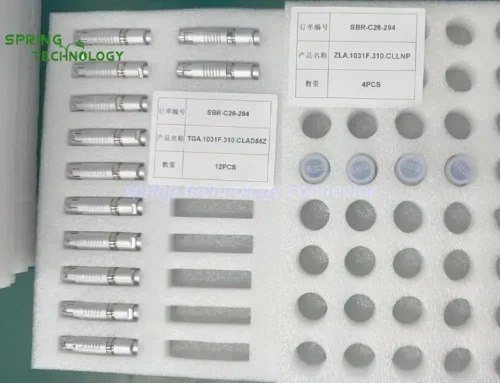
The CBTG2BG-SMSM12-D420 plug offers 12 low-voltage contacts, solder termination and push-pull coupling, making it a candidate for multi-contact cable interfaces in portable concrete corrosion potential mapping instruments — and with a compatible receptacle selected, this type of interface simplifies cable handling and equipment maintenance. This delivery shows how Spring Technology serves civil infrastructure inspection, aligning a 12-contact 2B plug and free-socket receptacle with the customer’s survey requirements, and the company also provides professional customization services for both push-pull connectors and cable assemblies, offering tailored solutions to meet your specific technical requirements.
Before production, manufacturers should verify that the CBDH2BG-SFSM12-D42B is the intended mating part and confirm its contact configuration, cable compatibility, electrical ratings and environmental protection — the complete connector assembly must meet the instrument’s actual field-use requirements.
For more information about our 2B series connectors or to discuss your requirements, contact us at [email protected] or [email protected], or visit our website. Our engineering team will respond to your connectors for corrosion potential mapping instruments enquiry within 24 hours.
Further Reading
- Push-Pull Connector for Control Cabinets 2026: CBTG2BG-SMSM02-D52B and CBME2BG-SFSM10-0000 for Advanced Industrial Automation and Robotics Control Cabinets for Russian Customers
- CBTG2FN Push-Pull Connector for Precision Machine Tools 2026: CBTG2FN-SMSM09-D520 and CBZL2FN-SFPM09-S000 for Multi-Channel Miniature Sensor Aggregation for Russian Client
- CBTG2BG Push-Pull Connector for Hydraulic Torque Wrench Pumps 2026: 2B Series 4-Contact 15 A Plug for Industrial Bolting Control Interfaces
- CBZG00BG Push-Pull Connector for Insulation Resistance Testers 2026: 00B Series 4-Contact M7 Panel Socket for Portable Test Instruments for US Client
- Push-Pull Connector for Unmanned Ground Vehicles 2026: CBTW3FN-SMSM04-D520 and CBZG3FN-SFSM04-R000 for Rugged UGV Control Enclosures for German Customers
- TGG.2B Straight Plug — Product Page
- DHG.2B Free Socket — Product Page
- 2B Series Connector